
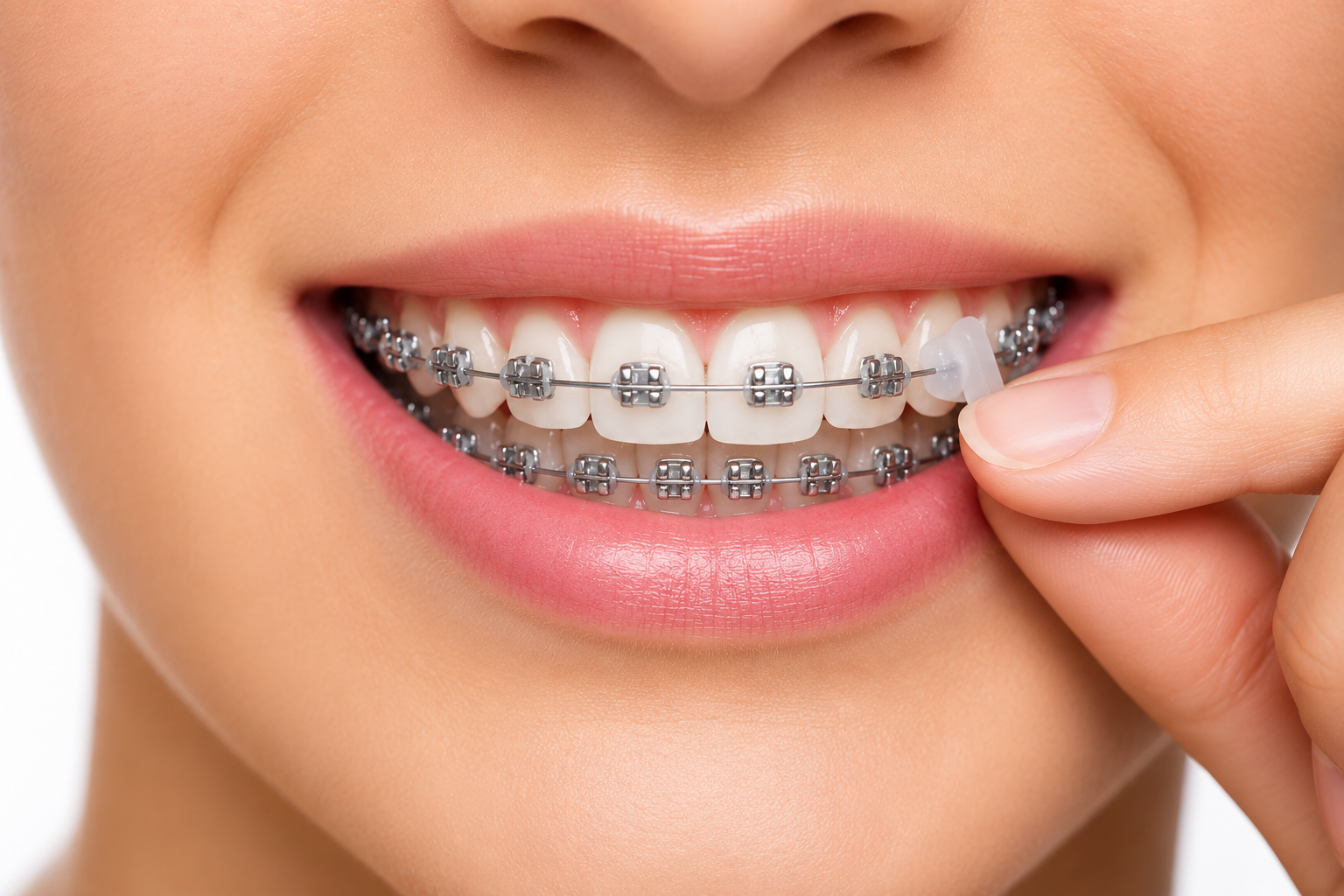
Orthodontic wax may help reduce irritation caused by braces by creating a protective barrier between brackets and soft tissues. At Dental Care Center of Hollywood, orthodontic care often includes guidance on managing minor discomfort during treatment to support consistent progress.
Orthodontic wax is a pliable material placed over brackets or wires to reduce friction against soft tissues.
Example: If a bracket rubs against the inner cheek, then wax may reduce direct contact and discomfort.
Orthodontic wax works by forming a protective barrier between braces and oral tissues.
If irritation is caused by a specific bracket, then applying wax directly over that area may improve comfort.
Orthodontic wax is typically used during periods of increased irritation or adjustment.
If discomfort occurs suddenly, then checking for a loose wire or shifted bracket may also be necessary.
Orthodontic wax application requires clean, dry surfaces for proper adhesion.
If wax does not stay in place, then the surface may need to be dried more thoroughly before application.
Braces irritation typically results from mechanical friction or adjustment changes.
If irritation increases after adjustments, then temporary discomfort is common but should gradually improve.
Orthodontic wax provides surface protection, while other methods address underlying causes.
Orthodontic wax
Other options
If discomfort is caused by hardware misalignment, then professional care may be recommended.
Orthodontic wax may not fully resolve issues caused by structural or mechanical problems.
If these conditions are present, then evaluation through orthodontic treatment may be necessary.
Orthodontic treatment planning may help reduce recurring irritation by improving alignment and fit.
Patients undergoing treatment may benefit from orthodontics for adults if alignment concerns develop later in life.
Younger patients may require tailored care such as
orthodontics for children or orthodontics for teens depending on growth stage.
Oral hygiene plays a role in how tissues respond to braces.
Routine care such as professional dental cleanings and prevention may support comfort during orthodontic treatment.
Orthodontic wax is typically used as a temporary solution during periods of irritation.
Example: If irritation occurs after tightening, then wax may be used for a few days until tissues adjust.
If irritation continues beyond typical adjustment periods, then evaluation through orthodontic treatment may help identify the cause.
Daily habits may help minimize irritation during orthodontic treatment.
If discomfort is managed consistently, then adaptation to braces may improve over time.
Orthodontic wax may be used in limited situations with other dental appliances.
Example: If a retainer wire rubs against the tongue, then applying wax may help reduce friction.
If discomfort persists with aligners or retainers, then adjustment or monitoring may be recommended.
Orthodontic wax may help manage minor irritation, but some situations may require professional evaluation.
Example: If a wire shifts and continues to irritate the cheek despite wax use, then adjustment may be needed.
If symptoms continue or worsen, then evaluation through orthodontic care may help prevent further complications.
Is orthodontic wax safe to swallow?
Small amounts are generally considered safe if accidentally ingested.
How often should I replace orthodontic wax?
Wax should be replaced after eating or when it loses shape.
Can orthodontic wax fix a broken bracket?
No. It may provide temporary coverage but does not repair orthodontic issues.
Why does irritation happen with braces?
Irritation may occur as tissues adjust to new pressure and contact points.
Braces-related irritation may develop from friction between orthodontic components and soft tissues, especially during early treatment phases or after adjustments. These changes may temporarily affect comfort as teeth and supporting structures shift.
If you are noticing persistent irritation, sharp discomfort, or areas that do not improve with wax, these signs may indicate a need for adjustment or evaluation. If this applies, identifying whether the cause is friction, alignment, or hardware-related may help guide appropriate care.You can request a consultation with Dental Care Center of Hollywood to evaluate your orthodontic condition and determine whether adjustments or additional care may help improve comfort and treatment progression.
| Monday | 8:30 AM – 5:30 PM |
| Tuesday | 8:30 AM – 5:30 PM |
| Wednesday | 8:30 AM – 5:30 PM |
| Thursday | 8:30 AM – 5:30 PM |
| Friday | 8:30 AM – 1:30 PM |
| Saturday | Closed |
| Sunday | Closed |