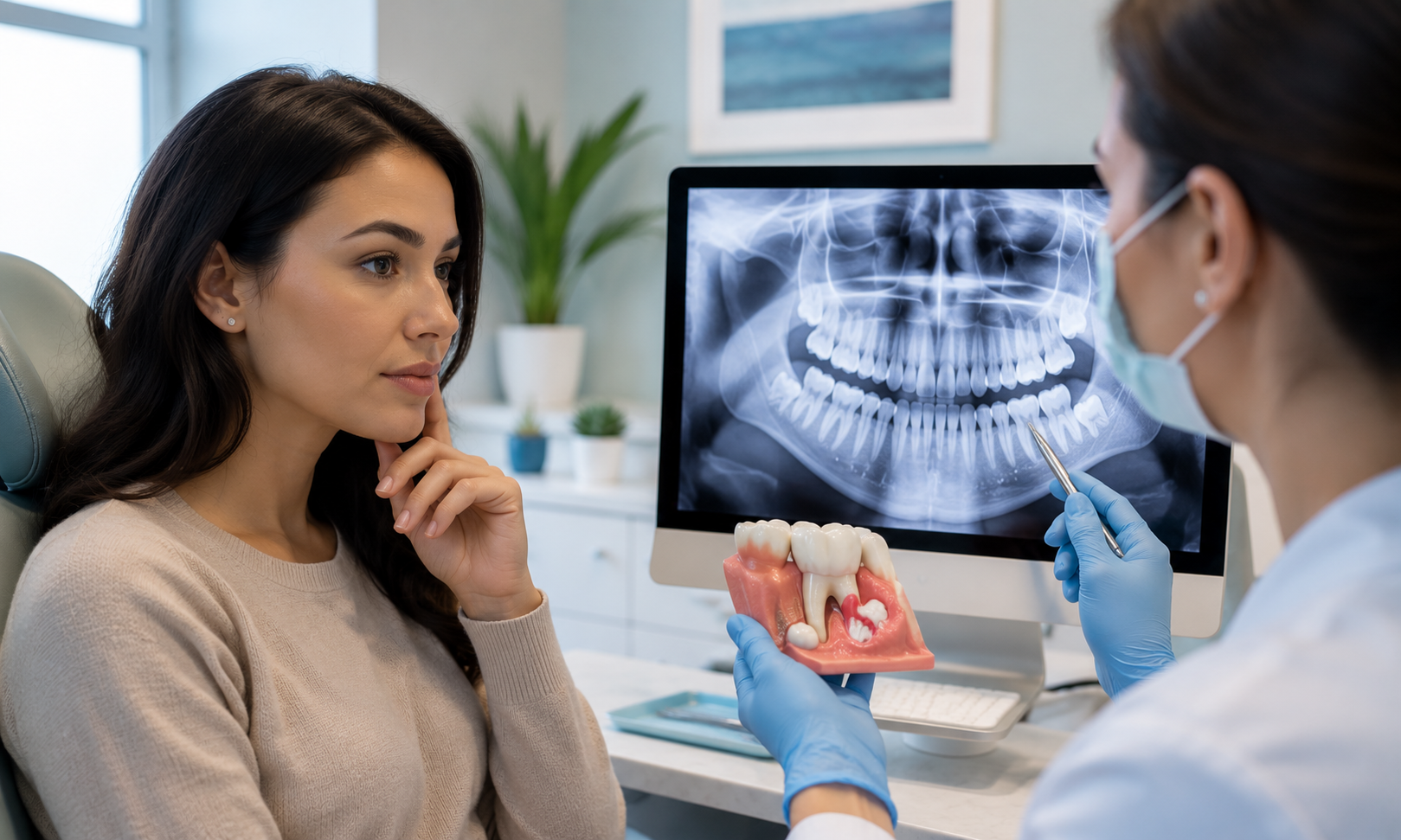
Oral surgery may be recommended when tooth damage, infection, anatomical concerns, or jaw-related conditions cannot be managed through conservative treatment alone. Treatment recommendations often depend on symptom severity, imaging findings, and long-term oral function goals. At Dental Care Center of Hollywood, patients commonly begin with evaluations involving oral maxillofacial surgery because individualized diagnosis and advanced imaging may help determine whether surgery fits their condition.
What it is:
A category of dental procedures designed to treat structural, functional, or disease-related conditions involving teeth, bone, gums, and surrounding tissues
Who it is for:
Main benefits:
Limitations:
Timeline / durability:
Recovery may range from several days to several months depending on treatment type and healing response.
Oral surgery is typically considered when conservative care cannot predictably restore function or preserve surrounding structures.
Conditions that sometimes require surgery include:
Cause → effect → treatment:
Impacted tooth → pressure buildup → surgical removal
Advanced decay → structural collapse → extraction consideration
For example, a fracture extending below the gumline may reduce restoration predictability and shift treatment toward surgical care.
Tooth Pain Does Not Always Mean Oral Surgery
Tooth pain does not automatically indicate a surgical condition.
Pain symptoms may develop from:
Condition → effect → solution:
Decay near pulp tissue → nerve irritation → possible endodontic treatment
For example, inflammation inside a tooth may respond differently than structural damage involving surrounding bone.
Patients with infected or damaged teeth sometimes explore root canal therapy because preserving natural tooth structure may remain possible under certain conditions.
Wisdom teeth commonly generate oral surgery recommendations because eruption patterns vary significantly.
Wisdom tooth concerns may include:
Examples:
Partial eruption → bacterial trapping → gum irritation
Horizontal positioning → adjacent tooth pressure → structural concerns
Patients experiencing swelling, discomfort, or crowding changes sometimes benefit from evaluation because wisdom teeth extractions may become appropriate when eruption patterns create long-term concerns.
Some wisdom teeth remain symptom-free for years. Other wisdom teeth develop changes gradually because eruption angles and available space differ among individuals.
Bone loss may affect treatment planning because jawbone support influences tooth stability and restorative possibilities.
Bone-related concerns sometimes include:
Cause → effect → treatment:
Missing tooth → reduced stimulation → gradual bone reduction
Reduced bone volume → implant limitations → grafting evaluation
For example, people considering tooth replacement sometimes require dental implants because missing teeth and bone changes may influence long-term restorative planning.
Bone remodeling continues over time. Long-term tooth absence sometimes changes jaw structure and may alter future treatment pathways.
Advanced gum disease may contribute to oral surgery recommendations when infection affects soft tissue attachment and supporting bone.
Periodontal concerns sometimes include:
Cause → effect → treatment:
Untreated periodontal disease → support loss → surgical intervention consideration
For example, severe tissue destruction sometimes changes tooth stability and may increase the need for advanced treatment planning.
Patients with progressive tissue concerns occasionally require procedures designed to preserve surrounding structures and reduce disease progression.
Dental evaluations identify whether symptoms involve anatomical, functional, or disease-related concerns.
Examinations commonly include:
If symptoms appear limited, then conservative treatment may be considered first.
If tooth support damage appears extensive, then surgical pathways may become more appropriate.
Examples:
Localized decay → restorative treatment
Extensive fracture → extraction consideration
Dental Care Center of Hollywood emphasizes individualized treatment planning and modern diagnostics because treatment recommendations depend on condition-specific findings rather than symptoms alone.
Treatment pathways depend on disease progression and structural findings.
| Condition | Non-Surgical Option | Surgical Option |
| Mild decay | Fillings | Rare |
| Tooth infection | Root canal | Extraction |
| Gum inflammation | Deep cleaning | Periodontal surgery |
| Missing teeth | Temporary replacement | Implant placement |
| Impacted teeth | Monitoring | Extraction |
Some conditions respond to conservative treatment while others involve anatomical limitations that affect long-term predictability.
Recovery experiences vary according to treatment scope and individual healing patterns.
Factors influencing healing may include:
Examples:
Simple extraction → shorter healing timeline
Bone grafting → extended healing timeline
Multiple procedures → broader recovery considerations
Tooth pain alone does not automatically indicate surgery because decay, inflammation, infection, and bite-related conditions may create similar symptoms.
Treatment recommendations depend on tooth structure and long-term prognosis. Some teeth remain restorable while others may not.
Wisdom teeth do not always require removal. Position, symptoms, and surrounding tissue conditions often influence recommendations.
Bone loss does not automatically require surgery. Treatment planning typically depends on severity and long-term restorative goals.
Digital imaging commonly helps dentists evaluate anatomy, infection patterns, and structural concerns more accurately.
Recovery experiences vary and often depend on procedure complexity and healing response.
Oral conditions sometimes develop gradually through infection, eruption patterns, support changes, or tooth damage. Mild symptoms occasionally begin as intermittent discomfort before progressing into broader functional concerns.
If you are noticing swelling, jaw discomfort, persistent pain, chewing difficulty, or changes in tooth position, a dental evaluation may help identify contributing factors. If this applies to your situation, imaging and clinical examination may help determine whether conservative treatment or surgical pathways fit your condition.
Dental Care Center of Hollywood focuses on personalized care, advanced diagnostics, and long-term treatment planning. Patients interested in understanding whether surgery may fit their condition can request a consultation to evaluate symptoms and discuss appropriate next steps.
| Monday | 8:30 AM – 5:30 PM |
| Tuesday | 8:30 AM – 5:30 PM |
| Wednesday | 8:30 AM – 5:30 PM |
| Thursday | 8:30 AM – 5:30 PM |
| Friday | 8:30 AM – 1:30 PM |
| Saturday | Closed |
| Sunday | Closed |