
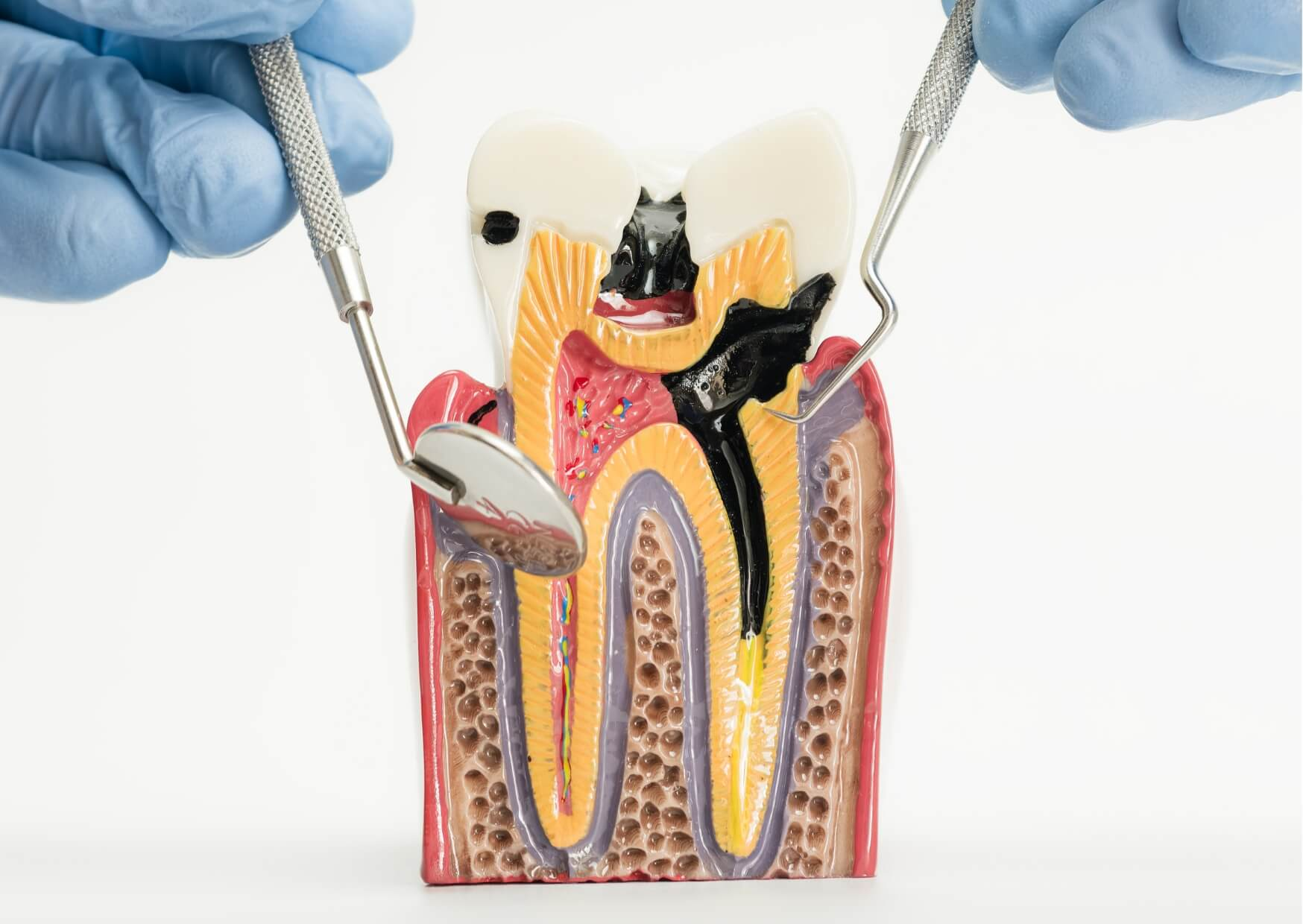
A tooth infection often starts with something that seems minor: a toothache that will not go away, a sore spot on the gum, or swelling that gets worse over a day or two. Many people want to know what an infected tooth looks like, but the answer depends on where the infection began and how far it has spread.
Sometimes the tooth looks darker than the teeth around it, especially if the nerve inside has been damaged. In other cases, the tooth may not look very different, but the nearby gum may appear swollen, red, shiny, or raised, sometimes with a pimple-like bump on the gum that drains fluid.
A dental infection does not always stay limited to one tooth. Because of that, persistent pain, facial swelling, a bad taste, fever, or pain when biting should be taken seriously and checked by a dentist.
At Dental Care Center of Hollywood in Hollywood, FL, we provide root canal therapy to treat infected teeth and help preserve natural teeth.
An infected tooth may look cracked, broken, deeply decayed, or discolored. If the infection developed from untreated decay, the enamel may show a dark hole or a large damaged area.
Sometimes the clearest change is in the gum, not the tooth. The gum near the tooth may look puffy, red, or tender, and there may be a small swollen area that looks like a blister.
That bump can be a drainage point from an abscess, which is a pocket of infection. In more advanced cases, swelling may spread into the cheek or jawline.
If the face looks uneven, feels tight, or the swelling is increasing, that can point to a spreading dental infection and should not be ignored.
Appearance alone does not confirm an infection. Many infected teeth also cause throbbing pain, sensitivity to hot or cold, pain with chewing, foul breath, a bad taste in the mouth, or pressure around one tooth.
Some infections cause severe symptoms right away. Others drain on and off and cause only mild discomfort for a while.
A draining infection may briefly feel better, but that does not mean the problem is gone. If symptoms are persistent, worsening, or hard to explain, an exam and digital X-rays are usually needed to find the source safely.
For a broader overview of common symptoms, Mayo Clinic outlines many of the warning signs people notice with a tooth abscess.
The most common cause is untreated tooth decay that reaches the pulp, the soft inner part of the tooth that contains nerves and blood vessels. Infection can also begin after a crack, trauma, a leaking filling or crown, advanced gum disease, or a tooth that did not heal properly after earlier treatment.
Once bacteria reach deeper tissues, the body responds with inflammation. That pressure inside the tooth or surrounding bone is one reason infected teeth can be so painful.
Not every painful or discolored tooth is infected, and not every infection is obvious from the outside. That is why dentists rely on symptoms, an exam, and imaging rather than appearance alone.
Some dental infections become urgent, especially when swelling is increasing or the infection is affecting nearby tissues. Same-day or prompt dental evaluation is important if there is facial swelling, fever, trouble swallowing, or trouble opening the mouth.
Other red flags include pain that wakes you from sleep, rapid worsening over 24 to 48 hours, pus drainage, or swelling under the jaw. These signs may mean the infection is no longer staying localized.
If breathing feels affected, swelling is spreading into the face or neck, or fever is significant, emergency medical care may be necessary. General education cannot replace an in-person evaluation in that situation.
Mayo Clinic also explains when dental swelling may need emergency care rather than waiting.
A dentist will usually examine the tooth, the gum, and the surrounding tissues. They may also check for tenderness, swelling, drainage, and pain when you bite.
Digital X-rays help show decay, bone changes, infection around the root, or damage hidden below the surface. In some cases, the tooth may also be tested to see how the nerve responds.
This helps determine whether the pulp is inflamed, dying, or already nonvital, meaning the tissue inside the tooth is no longer healthy. It also matters because similar symptoms can come from gum infections, a cracked tooth, sinus pressure, or a tooth that is irritated but not infected.
Treatment depends on the cause and whether the tooth can be saved. If the infection is inside the tooth, root canal therapy may be recommended to remove infected tissue, disinfect the inside of the tooth, and seal it.
If the tooth is too damaged to restore, extraction may be the safer option. If you’re preparing for a planned extraction, especially wisdom teeth. See our wisdom teeth extraction page for preparation tips.
When swelling or drainage is present, treatment may also involve managing the infected area directly in the office. Many patients focus on stopping pain quickly, and that matters, but the bigger goal is removing the source.
Without that, symptoms may return even if they improve for a short time. When a tooth needs restoration after infection control or a root canal, same-day crowns can provide a fast, durable solution.

A visit for a suspected tooth infection usually starts with an exam and X-rays. If there is significant pain or swelling, the dentist will first focus on finding the source and deciding whether treatment should happen the same day.
Comfort options vary by office and procedure. Local anesthetic is standard, and some practices also offer sedation options for patients with high anxiety or for more involved treatment.
If immediate definitive treatment is not possible that day, the dentist may explain short-term steps and arrange prompt follow-up. The exact plan depends on the tooth, the severity of the infection, and the patient’s overall health history.
Tooth infections often begin with a cavity, a crack, or gum disease that causes little or no early discomfort. Regular exams help catch those problems before bacteria reach deeper tissues.
Routine dental exams & cleanings lower the chance of infection and make early problems easier to treat. Daily brushing with fluoride toothpaste, cleaning between teeth, and keeping up with routine dental visits also help lower risk.
A well-fitting crown or filling matters too, because leaking dental work can allow bacteria back into the tooth over time. In the long run, early treatment is almost always easier, less invasive, and less expensive than waiting for pain and swelling to force an urgent visit.
If a tooth looks darker, broken, swollen around the gumline, or linked to a draining bump, it is reasonable to schedule a dental exam soon. Pain with biting, lingering sensitivity, or a bad taste in the mouth adds to the concern.
If symptoms are severe or swelling is increasing, do not wait for the tooth to “declare itself.” Dental infections can worsen quickly, and early treatment gives the best chance of controlling the problem while preserving treatment options.
When in doubt, it is better to have a dentist assess the tooth than to guess based on appearance alone. A timely exam can clarify whether the issue is an infection, another dental problem, or something that needs urgent escalation.
If you suspect a tooth infection, Dental Care Center of Hollywood in Hollywood, FL offers root canal therapy and same-day options for patients from Hallandale Beach and Pembroke Pines; call (954) 989-5500 to schedule.
Yes. Some infected teeth show obvious decay, discoloration, or swelling, but others look fairly normal from the outside. The infection may be deeper in the tooth or around the root, which is why X-rays are often needed.
It may look like a small swollen bump, blister, or pimple on the gum near the painful tooth. It can be red, tender, and sometimes drain fluid with a bad taste.
No. A dark tooth may be related to prior trauma, internal damage, old dental materials, or other changes. Still, a dark tooth should be evaluated, especially if there is pain, swelling, or sensitivity.
Symptoms may come and go, especially if pressure temporarily drains, but the underlying source usually does not resolve without dental treatment. Ongoing or returning symptoms should be examined.
Facial swelling should be treated urgently if it is increasing, associated with fever, causing trouble swallowing, limiting mouth opening, or affecting breathing. Those signs may suggest a more serious spread of infection.
| Monday | 8:30 AM – 5:30 PM |
| Tuesday | 8:30 AM – 5:30 PM |
| Wednesday | 8:30 AM – 5:30 PM |
| Thursday | 8:30 AM – 5:30 PM |
| Friday | 8:30 AM – 1:30 PM |
| Saturday | Closed |
| Sunday | Closed |