
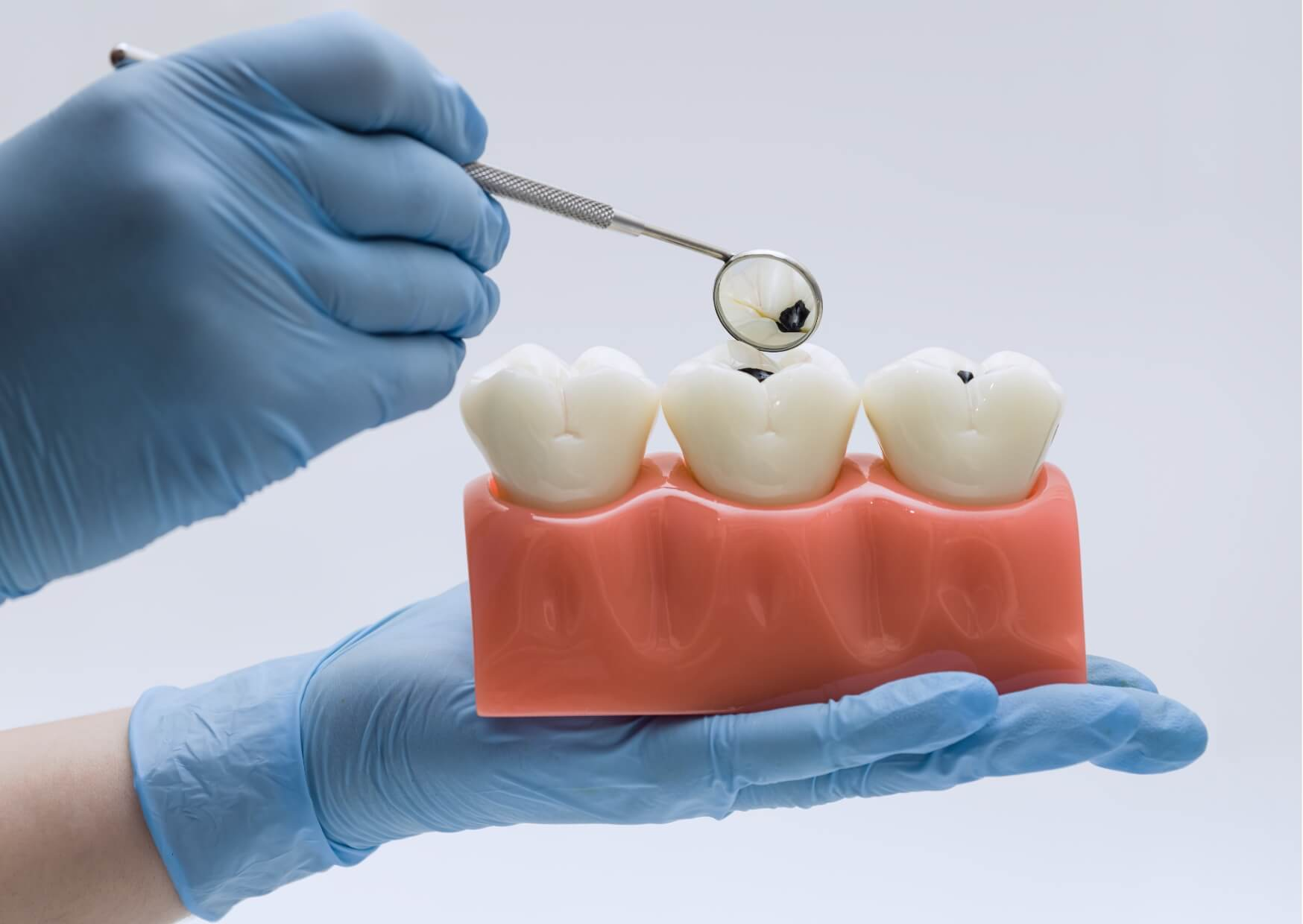
A small dark spot, a chalky patch, or a rough area on a tooth can be easy to ignore at first. Still, many people notice a change in color or texture and wonder if it could be decay.
The short answer is that a cavity may look like a white, brown, or black area on a tooth, but appearance alone does not always confirm the cause. Stains, worn enamel, tartar buildup, and old dental work can look similar, which is why dental exams matter when a spot is new, changing, or paired with sensitivity.
Dental Care Center of Hollywood offers dental exams and cleanings in Hollywood, FL and can evaluate spots like this.
A cavity is a damaged area in a tooth caused by decay. It starts when acids made by mouth bacteria weaken enamel, the hard outer layer of the tooth.
In the earliest stage, decay may appear as a dull, chalky white spot near the gumline or on a chewing surface. This can be a sign that minerals are being lost from the enamel, even before a hole forms.
As decay progresses, the area may turn light brown, dark brown, or black. The surface may also look rough, pitted, or slightly sunken.
Once a true cavity forms, there may be a visible hole, a shadowed groove, or a broken-looking area that catches food. In some cases, the damage is between teeth or under the surface, so there may be little to see without X-rays.
Cavities often develop in places where plaque stays longer. Plaque is the sticky film of bacteria that builds up on teeth throughout the day.
On back teeth, decay often starts in the deep grooves used for chewing. These grooves may look stained, but not every stained groove is a cavity.
Between teeth, a cavity may be nearly invisible from the outside. Sometimes the only clues are floss catching, food packing, or a new area of sensitivity.
Near the gumline, decay may look like a pale white patch, a brown line, or a notch-shaped defect. Root surfaces can also decay, especially when receding gums expose the softer root structure.
A tooth stain is one of the most common reasons people think they have a cavity. Coffee, tea, tobacco, and normal wear can darken grooves without causing decay.
Tartar can also look suspicious. This hardened plaque buildup may appear yellow, tan, or brown, especially near the gums.
Old fillings may leave dark edges or shadows that are easy to misread in the mirror. Cracks, enamel defects, and worn areas can also resemble cavities, especially under bright bathroom lighting.
That is why a dark spot does not always mean tooth decay. Dentists usually confirm a cavity with a visual exam, careful probing when appropriate, and X-rays when the area is not fully visible.
A cavity may not hurt at first. Early enamel damage can be visible without causing symptoms.
As decay moves inward, a tooth may become sensitive to sweets, cold drinks, hot foods, or pressure when chewing. Some people notice a sharp twinge, while others feel a dull ache that comes and goes.
Bad breath, a bad taste, food trapping in one area, or a rough edge on the tooth can also happen. If pain becomes spontaneous, severe, or throbbing, the decay may be deeper and should be checked promptly.
Swelling, facial pressure, fever, or pain that keeps getting worse can point to a more urgent dental problem. Those signs should not be monitored at home for long.
During an exam, a dentist looks at the color, texture, and location of the area. Good lighting, magnification, and dry tooth surfaces make early changes easier to detect.
Digital X-rays are often important because many cavities start where patients cannot see them well, especially between teeth. X-rays can also show whether decay is limited to enamel or has reached dentin, the softer layer under the enamel.
If the tooth hurts, the dentist may also check the bite, test for temperature sensitivity, and examine the nearby gums. The goal is not just to find a spot, but to determine whether the tooth is stable, actively decaying, cracked, or inflamed.
When decay is caught very early, a dentist may recommend preventive care to stop or slow the process. That may include fluoride treatment to strengthen enamel, changes in home care, and closer follow-up.
If a cavity has created a hole or softened part of the tooth, composite fillings are often the most direct treatment. The decayed portion is removed, and the tooth is rebuilt with a material that restores shape and function.
Larger cavities may need more than a simple filling. If decay is extensive or the tooth is weakened, treatment may involve a crown, which is a custom cap that covers and protects the tooth.
If the inner nerve tissue becomes inflamed or infected, root canal treatment may be needed to save the tooth. In severe cases, when the tooth cannot be restored, extraction may be the safest option.
Many offices also discuss same-day restorations or sedation options when treatment is more involved or anxiety is part of the picture. The right plan depends on the tooth, the depth of decay, symptoms, and long-term stability.
A visit for a suspicious tooth usually starts with a conversation about what changed and whether there is pain, sensitivity, or food trapping. If the area is hard to see, dental X-rays may be taken.
If treatment is needed, the dentist will explain whether it can be handled that day or scheduled later. Many small to moderate cavities are treated in a routine visit with local anesthetic to numb the area.
For nervous patients, comfort measures may include calm explanations, breaks during treatment, and, in some practices, sedation. The goal is to treat the problem before it becomes larger, more painful, and more expensive to repair.
Most decay is easier to manage when it is found early. Regular exams help catch changes before they turn into visible holes, fractures, or nerve pain.
At home, good brushing and flossing reduce plaque buildup in the places where cavities usually start. Diet also matters, especially frequent sugary snacks, sports drinks, and sipping sweetened beverages over long periods.
Dry mouth can raise cavity risk because saliva helps protect teeth. Patients with frequent decay, gum recession, orthodontic appliances, or a history of dental work often benefit from closer preventive follow-up.
One of the most helpful parts of a dental visit is getting a clear answer about whether a spot is active decay, an old stain, or an area to watch. That clarity helps patients make decisions early instead of waiting for pain to force the issue.

If a tooth has developed a new white, brown, or black area, it is reasonable to have it checked, especially if the surface feels rough or food starts catching there. The same is true for sensitivity that lasts more than a few days or keeps returning in the same spot.
Urgent care is more important when there is swelling, worsening pain, pain with biting, or temperature sensitivity that lingers after the trigger is gone. These patterns can suggest deeper decay or irritation inside the tooth.
Even when the area turns out to be a stain rather than a cavity, the visit can still be worthwhile. A dentist can tell you what the spot likely is, whether it needs monitoring, and what steps may help protect the tooth over time.
If you are unsure what a mark on a tooth means, scheduling an exam is the safest next step and often the fastest way to get a clear answer.
At Dental Care Center of Hollywood in Hollywood, FL, our dental exams and cleanings help diagnose and treat early decay; call (954) 989-5500 to schedule. We also serve patients from Hallandale Beach and Pembroke Pines.
Yes. Early decay may appear as a chalky white area before it turns brown or black. A white spot does not always mean a cavity, but it can be an early sign that enamel is weakening.
No. Early cavities may start as color or texture changes without a visible hole. Some cavities are also hidden between teeth or under the surface.
Yes. Some brown spots are stains, tartar, or natural groove discoloration rather than decay. A dentist may need to examine the tooth and sometimes take X-rays to tell the difference.
It may not be visible at all. Between-teeth cavities are often found on X-rays, though some people notice floss shredding, food trapping, or new sensitivity.
It is more urgent if there is swelling, severe pain, pain that wakes you up, fever, or pressure when biting. Those signs can suggest deeper tooth involvement and should be assessed promptly.
| Monday | 8:30 AM – 5:30 PM |
| Tuesday | 8:30 AM – 5:30 PM |
| Wednesday | 8:30 AM – 5:30 PM |
| Thursday | 8:30 AM – 5:30 PM |
| Friday | 8:30 AM – 1:30 PM |
| Saturday | Closed |
| Sunday | Closed |