
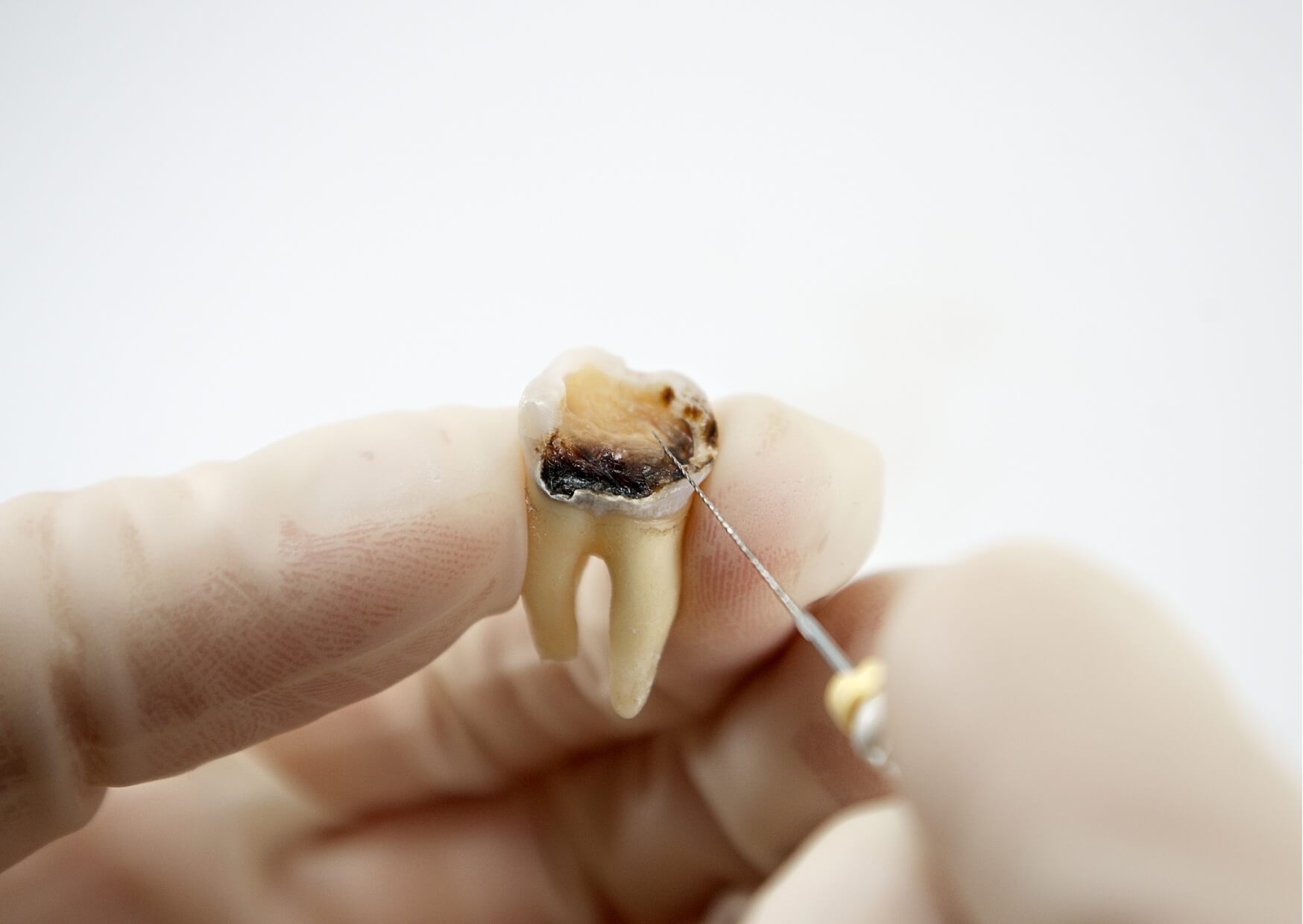
A tooth that looks dark, broken down, or unusually worn can be alarming. When people ask what a rotten tooth looks like, they are usually describing advanced tooth decay or a tooth that has been badly damaged over time.
A rotten tooth may look yellow-brown, dark brown, or black in one area or across a larger part of the tooth. It may also look chipped, hollow, pitted, or partly collapsed if decay has weakened the enamel, the hard outer layer of the tooth.
The appearance is not always dramatic at first. Some decayed teeth begin as a small white, chalky, or brown spot before turning into a visible hole or rough area that catches your tongue.
Not every discolored tooth is rotten, and not every rotten tooth causes pain right away. That is one reason a dental exam matters when a tooth looks different, feels softer than usual, or leaves a persistent bad taste or odor around it.
Dental Care Center of Hollywood offers dental exams and cleanings in Hollywood, FL and can evaluate teeth that look dark, broken, or worn.
A rotten-looking tooth usually develops when plaque bacteria feed on sugars and starches left in the mouth. These bacteria produce acids that slowly wear away enamel and then move deeper into the tooth.
Once enamel is breached, decay can spread into dentin, the softer layer underneath. Dentin breaks down faster, so the tooth may start to look darker, feel rougher, and lose its normal shape.
Dry mouth, frequent snacking, sugary drinks, tobacco use, older fillings, and missed dental visits can all raise the risk. The longer decay goes untreated, the more likely the tooth is to crumble or become infected.
In some cases, a tooth may look rotten because of trauma, long-term wear, or a dead nerve inside the tooth rather than active decay alone. That difference matters because the right treatment may be very different.
A rotten tooth may show one or more visible changes. It can look stained, sunken, cracked, or broken, and food may pack into the area more easily.
Other symptoms often appear as the damage gets deeper. These may include sensitivity to cold, sweets, or biting, a bad taste, persistent bad breath, gum irritation near the tooth, or pain that comes and goes.
If the inner pulp becomes inflamed or infected, the pain may become more intense or throbbing. The pulp is the soft center of the tooth that contains nerves and blood vessels.
Some teeth with severe decay do not hurt much until the problem is advanced. That is why even a painless dark spot should not be ignored.
Early decay may look like a dull white area, a chalky patch, or a light brown spot. At this stage, the tooth surface may still feel mostly intact, and treatment may be more conservative.
As the cavity gets deeper, a small hole or shadow may become easier to see. The tooth may start to trap food, feel rough, or show a darker brown area near the chewing surface or between teeth.
With more severe damage, the tooth may appear blackened, hollow, fractured, or partly missing. In some cases, only a jagged shell remains above the gumline, which is often what patients mean by a rotten tooth.
If infection develops, the gum near the tooth may look swollen, shiny, or tender. A small pimple-like bump on the gum can sometimes appear, which may signal drainage from an abscess, a pocket of infection.
Several dental problems can resemble a rotten tooth. Heavy staining from coffee, tea, tobacco, or certain mouth rinses may darken a tooth without causing structural damage.
An old silver filling can also make part of a tooth look gray or black. A tooth with a dead nerve may darken from the inside even if the outer surface is not badly decayed.
Gum recession can expose the root surface and create yellow or brown areas that look concerning. Worn enamel, cracks, and tartar buildup can also change the way a tooth looks.
That is why visual appearance alone does not give the full answer. Dentists often use an exam, digital X-rays, and simple clinical tests to determine whether the issue is decay, infection, staining, fracture, or a combination of problems.
Treatment depends on how deep the damage goes and whether the tooth can still be restored. The goal is to remove disease, control pain, and preserve long-term chewing function whenever possible.
If decay is limited, treatment may involve a tooth filling. If more tooth structure has been lost, a crown may be recommended to cover and protect the remaining tooth.
If the goal also includes improving appearance, cosmetic dental treatments may help restore the tooth’s shape and color. The right option depends on how much healthy structure is left.
When the pulp is inflamed or infected but the tooth can still be saved, root canal therapy may be the best option. This treatment removes infected tissue inside the tooth, disinfects the space, and seals it so the tooth can often be restored with a crown.
If the tooth is too damaged to save, extraction may be the safest choice. After removal, replacement options may include a dental implant, bridge, or partial denture depending on the tooth’s location, bone support, and overall oral health.
Many offices also discuss comfort measures during the visit. Local anesthetic is standard, and some practices offer sedation options for anxiety, longer procedures, or more complex treatment.
The visit usually starts with a close visual exam and dental X-rays. X-rays help show how far decay has spread, whether the nerve is involved, and whether there is bone loss or infection around the root.
The dentist may also check for tenderness, mobility, gum swelling, and how much solid tooth structure remains. These details help determine whether the tooth is restorable or whether removal would be more predictable.
If there is pain, swelling, or obvious infection, the first priority is to stabilize the problem and reduce the risk of complications. In some offices, diagnosis and treatment can happen the same day, especially for urgent pain, a broken tooth, or an extraction that cannot wait.
A good visit should leave you with a clear explanation of what is happening, what can be saved, and what the next step should be. Clear answers matter more than technical language.
A rotten-looking tooth should be checked soon if there is worsening pain, a visible fracture, or gum swelling nearby. Prompt care is especially important if chewing is difficult or the tooth feels loose.
Seek urgent dental care if there is facial swelling, fever, pus, or trouble swallowing. These signs may point to a spreading infection and should not be watched at home.
Bleeding that does not settle, a rapidly enlarging gum bump, or severe pain that keeps waking you up also deserves quick attention. If swelling affects breathing or swallowing, emergency medical care is appropriate.
Even without severe symptoms, a dark or collapsing tooth rarely improves on its own. Waiting often leads to more extensive treatment and fewer options to save the tooth.

Once a tooth has started to break down, the bigger picture matters. Dentists look for the reason decay developed in the first place, not just the cavity itself.
That may include reviewing home care, diet habits, dry mouth, grinding, old restorations, and how regularly the teeth are being checked. Prevention is less about perfection and more about catching small changes before they become painful or expensive.
For some patients, fluoride treatments, more frequent cleanings, or replacing leaking fillings may help lower future risk. If a tooth cannot be saved, planning a stable replacement can also protect nearby teeth from shifting or taking on too much bite pressure.
If you are noticing a tooth that looks dark, hollow, broken, or unusually soft, scheduling an exam sooner rather than later is the safest next step. A dentist can tell you whether the tooth is decayed, infected, stained, or fractured and explain which treatment makes the most sense for your situation.
Dental Care Center of Hollywood provides dental exams and cleanings in Hollywood, FL, and serves patients from nearby Hallandale Beach and Pembroke Pines. Call us at (954) 989-5500 to schedule an evaluation.
Yes. Early decay may appear as a chalky white spot before it turns brown or black. White areas can also reflect mineral loss in the enamel rather than a deep cavity.
No. Some badly decayed teeth cause very little pain until the nerve is affected or the tooth cracks. A tooth can still need treatment even if it is not hurting.
In many cases, yes, if enough healthy tooth structure remains. Fillings, crowns, or root canal treatment may save the tooth, but some teeth are too damaged and need extraction.
No. A black or dark tooth may be caused by staining, an old filling, trauma, or a dead nerve. A dental exam is the best way to confirm the cause.
Book an appointment if a tooth looks dark, broken, hollow, or feels different from the surrounding teeth. Do not wait if there is swelling, severe pain, drainage, fever, or trouble chewing.
| Monday | 8:30 AM – 5:30 PM |
| Tuesday | 8:30 AM – 5:30 PM |
| Wednesday | 8:30 AM – 5:30 PM |
| Thursday | 8:30 AM – 5:30 PM |
| Friday | 8:30 AM – 1:30 PM |
| Saturday | Closed |
| Sunday | Closed |