
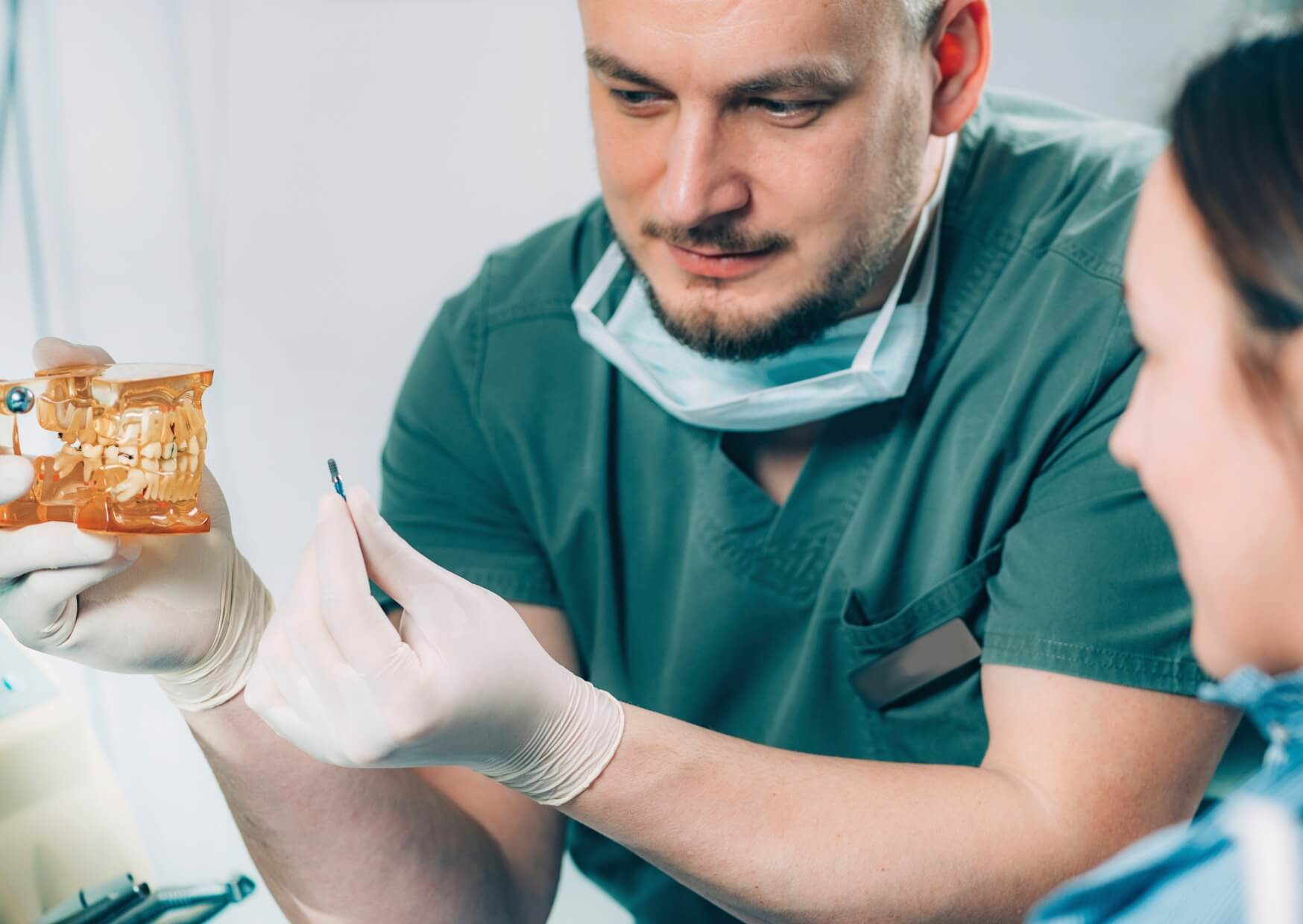
If a tooth is missing, loose, or needs to be removed, many patients want one clear answer: who does dental implants? The short answer is that implants may be placed by different trained dental professionals, depending on the case, the office setup, and whether extra procedures are needed.
In many communities, implant care is provided by a general dentist with implant training, an oral and maxillofacial surgeon, a periodontist, or sometimes a prosthodontist as part of a team. What matters most is not the job title alone, but whether the clinician has the right training, uses proper imaging and planning, and can manage your specific condition safely.
At Dental Care Center of Hollywood in Hollywood, FL, we provide dental implants and full implant planning and restoration that many patients are looking for.
Implant treatment may involve one provider or a team, depending on the complexity of the case.
Many implant cases are shared between providers. One office may handle the surgical placement while another completes the crown, and in complex cases that team approach can be a real advantage.
Not every missing tooth is replaced the same way. Some patients have strong bone support and healthy gums, while others have been missing a tooth for years and have changes in the jaw shape, nearby teeth, or bite.
A front tooth implant may require more attention to symmetry and gum contour because the area shows when smiling. These aesthetic concerns often connect to a broader smile makeover, so planning for soft tissue shape and crown appearance is important.
A back tooth implant may need more attention to chewing forces and the space between roots or nerves. The location of the missing tooth can affect both the surgical plan and the final restoration.
Past periodontal disease, smoking, teeth grinding, diabetes, and certain medications can affect healing and long-term success. These factors do not always rule out implants, but they often change how treatment should be planned.
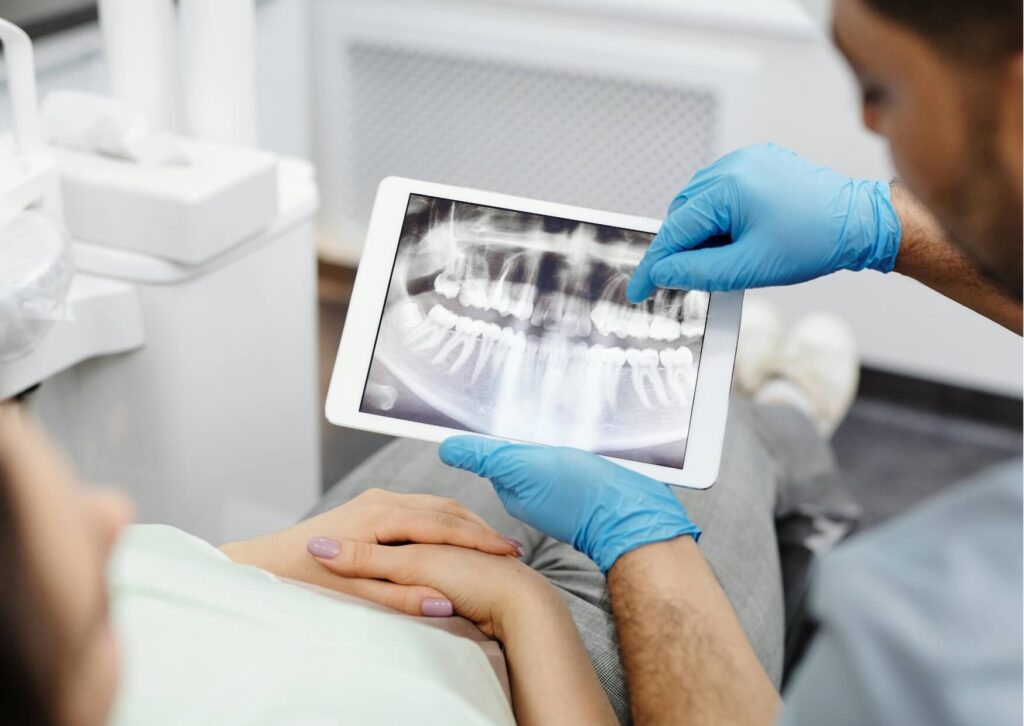
That is why a proper implant evaluation usually includes a clinical exam, dental X-rays, and often a 3D cone beam CT scan. This detailed scan helps show bone width, bone height, and nearby structures so treatment can be planned more safely.
Implant treatment often starts before the implant is ever placed. If a damaged tooth cannot be saved, the area may need extraction first.
In some cases, the implant can be placed the same day. In others, allowing the area to heal first is the safer choice.
If the jawbone is too thin or too soft, bone grafting may be recommended. A bone graft helps rebuild or support bone where an implant needs stable anchorage.
This is common when a tooth has been missing for a long time or when infection has damaged the socket. Some patients also need treatment for active periodontal disease before moving forward.
Healthy tissue around an implant is important because implants can also develop inflammation if plaque control is poor. In some cases, gum contouring may also be part of treatment planning.
After the implant integrates with the bone, meaning the bone heals around it, the final tooth replacement is made.
Some practices use implant healing protocols, such as L-PRF, to support soft-tissue and bone recovery.
This may be a single tooth implant crown, a bridge, or a full-arch prosthesis for multiple missing teeth. The final result depends on both the surgery and the restoration.
A well-placed implant still needs a properly designed crown and a bite that does not overload the area. Good planning on both sides helps support comfort, appearance, and long-term function.
A good consultation should feel organized and specific to your mouth, not like a sales pitch. The dentist or specialist should review symptoms, medical history, gum health, bone support, and the condition of nearby teeth.
Photos, X-rays, and sometimes digital scans are often used to plan the case. The discussion should cover whether the tooth can be saved, whether an implant is the best option, and whether other treatments such as a bridge or partial denture make more sense.
Patients should also hear a realistic explanation of timing. Some implant cases move quickly, especially after a straightforward extraction.
Others require staged treatment over several months to improve stability and long-term success. A careful explanation helps patients know what to expect at each step.
If dental anxiety is a concern, ask about sedation options for implant treatment. Many offices offer local anesthesia, nitrous oxide, or deeper sedation through a qualified provider, depending on the procedure and the practice.
Same-day implant treatment can mean different things. In some cases, the implant is placed the same day a tooth is removed.
In other cases, a temporary tooth is attached soon after placement so the space is not left visible during healing. This approach can work well when infection is controlled, bone support is adequate, and the implant can be stabilized at the time of surgery.
It is especially appealing in the front of the mouth, where appearance matters right away. Still, same-day treatment is not automatically the best treatment.
If the bone is weak, the bite is heavy, or infection is active, a delayed approach may be safer. A careful provider should explain when speed helps and when it creates avoidable risk.
For patients interested in faster restorations, some practices also offer same-day crowns when a same-day approach to the tooth replacement is appropriate.
Dental implants have high success rates, but they are not maintenance-free. The surrounding gums and bone still need protection, and the crown still needs to handle chewing forces properly.
A dentist may check for clenching or grinding because excess force can loosen parts or strain the implant over time. Night guards may be discussed when wear patterns suggest heavy pressure.
Home care matters too. Implants do not get cavities, but they can develop inflammation in the surrounding tissue.
This may start as soreness or bleeding and, in more advanced cases, can progress to peri-implantitis, which is inflammatory bone loss around an implant. Regular professional follow-up helps catch problems early.
The best implant providers usually talk as much about maintenance and prevention as they do about the procedure itself. That long-term focus is an important part of good implant care.
When comparing providers, ask who will place the implant, who will make the final tooth, and who will handle complications or follow-up if something does not heal as expected. Clear answers matter.
It is reasonable to ask how often the office performs implant treatment, whether 3D imaging is used, and whether the case may need referral to a specialist. A careful office should be comfortable discussing these points.
Look for a treatment plan that explains options, timing, limitations, and maintenance. Be cautious if the conversation skips over gum disease, bone support, smoking, or bite issues.
Those details are central to good implant care. The right choice is often the provider who combines surgical judgment, restorative planning, and honest communication.
For a simple case, that may be a well-trained general dentist. For a more complex case, it may be a specialist or a team approach.
Schedule a dental evaluation if a tooth is missing, a tooth is expected to be removed, or an older bridge or denture is no longer working well. Earlier planning can help preserve bone and expand treatment choices.
Prompt care is especially important if there is swelling, drainage, significant pain, a loose implant, or a failing tooth with signs of infection. These symptoms do not always mean an implant is needed, but they do mean the area should be examined.
If you are trying to decide who does dental implants in your area, start with a consultation focused on diagnosis and planning. The best next step is not guessing which title sounds most advanced.
It is finding a dental team that can explain the condition clearly, outline the options responsibly, and match treatment to the mouth in front of them.
If you are considering dental implants, Dental Care Center of Hollywood in Hollywood, FL, also serving Hallandale Beach and Pembroke Pines, can help. Call (954) 989-5500 to schedule an evaluation.
Several types of dental professionals may be qualified, including general dentists with implant training, oral surgeons, periodontists, and prosthodontists. The best choice depends on the complexity of the case, bone and gum health, and who will manage the full treatment plan.
Yes, some general dentists place and restore implants. Others refer the surgical part to a specialist and complete the crown afterward.
Either may be appropriate. Oral surgeons often handle more surgical or extraction-related cases, while periodontists often focus on implants in patients with gum disease, bone loss, or soft tissue concerns.
Sometimes, but not always. Some patients qualify for same-day placement or a temporary tooth, while others need healing time, grafting, or staged treatment for better long-term stability.
A missing tooth, a tooth that cannot be saved, a loose denture, a failing bridge, or changes in chewing can all justify an evaluation. Urgent review is important if there is swelling, drainage, severe pain, or signs of infection.
| Monday | 8:30 AM – 5:30 PM |
| Tuesday | 8:30 AM – 5:30 PM |
| Wednesday | 8:30 AM – 5:30 PM |
| Thursday | 8:30 AM – 5:30 PM |
| Friday | 8:30 AM – 1:30 PM |
| Saturday | Closed |
| Sunday | Closed |