
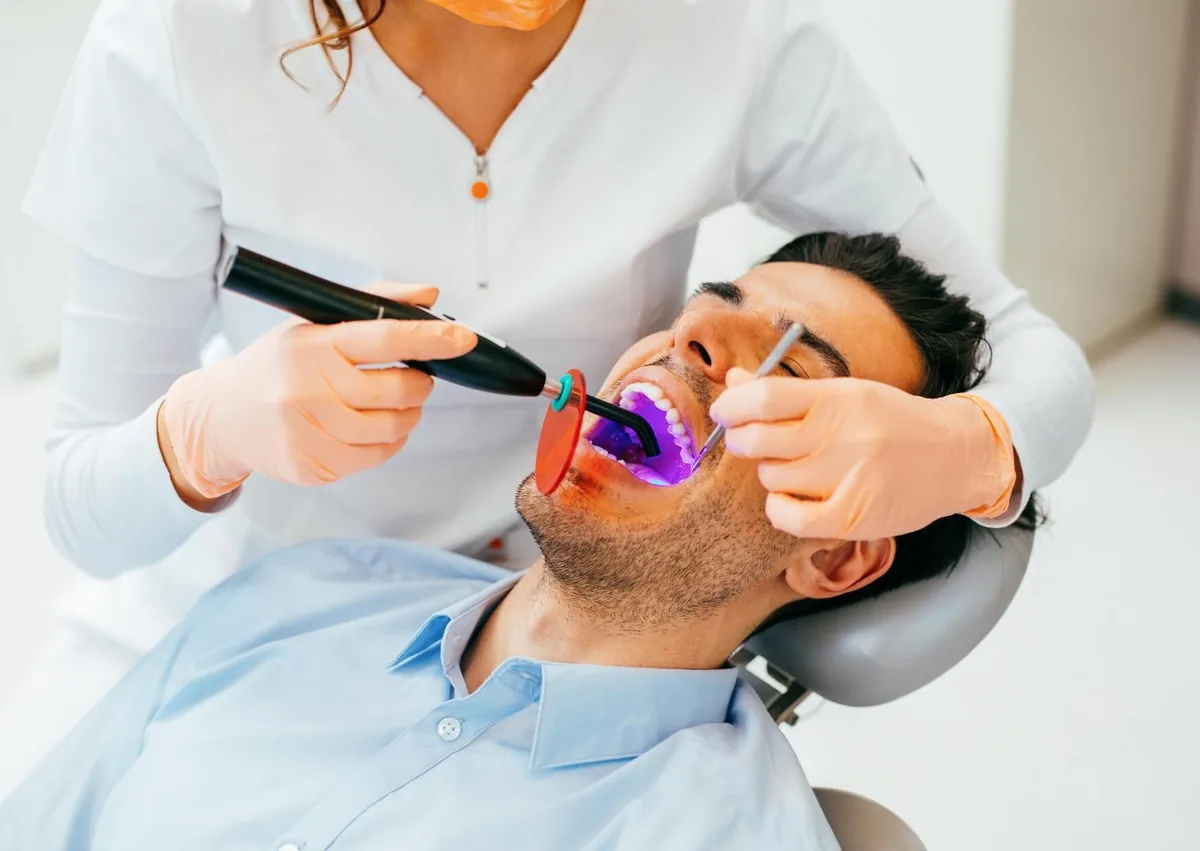
Dental bonding is a conservative way to repair a small chip, close a minor gap, cover limited discoloration, or improve a tooth’s shape. It often takes one visit and usually requires little or no removal of healthy enamel, but a dental exam is still important to confirm that bonding is the right choice and that decay, cracks, or bite problems are not being missed.
If you're deciding whether bonding is appropriate for a chip, stain, or small gap, a dental exam can confirm whether decay, cracks, or bite issues need treatment first. Dental Care Center of Hollywood in Hollywood, FL evaluates the tooth and recommends safe same-day or staged care to protect your long-term results.
A small chip, rough edge, or stubborn stain can make a healthy tooth look damaged. These changes may happen after an injury, normal wear, grinding, acid exposure, decay, or differences in tooth development.
Dental bonding uses a tooth-colored composite resin to restore limited areas and blend with nearby enamel. Common uses include:
For preventive resin treatment on the chewing surfaces of molars, see dental sealants.
Bonding is not the best solution for every damaged tooth. A deep crack, large cavity, major fracture, or heavy loss of tooth structure may need a crown, veneer, inlay, onlay, or another restoration instead.
Composite resin is made from a blend of plastic and fine glass particles. The material can be shaded and shaped to look similar to natural enamel.
The dentist usually roughens or conditions the tooth surface, applies an adhesive, places the resin in layers, and hardens each layer with a curing light. The bonded area is then shaped, smoothed, and polished so it fits the bite and blends with nearby teeth.
Most simple dental bonding can be completed in one appointment. If several teeth are being treated or the repair is more complex, the visit may take longer.
If a tooth was chipped or injured, the dentist may also use an exam and X-rays to check for deeper damage. Bonding can improve the visible surface, but it cannot treat hidden decay, a damaged nerve, or a fracture that extends into the root.
The best treatment depends on how much healthy tooth structure remains, how much force the tooth handles, and what result the patient wants. This comparison shows common uses, not a personal recommendation.
|
Treatment |
Often Considered For |
Tooth Preparation |
Important Limitation |
|---|---|---|---|
|
Dental bonding |
Small chips, gaps, contour changes, or localized discoloration |
Usually minimal or none |
Can stain, chip, or wear over time |
|
Porcelain veneer |
Broader cosmetic changes on a front surface |
Usually requires some enamel removal |
Not easily repaired and is generally irreversible |
|
Crown |
Heavily filled, weakened, fractured, or extensively damaged tooth |
Requires shaping around the tooth |
Removes more tooth structure than bonding |
|
Enamel reshaping |
Very small uneven edges or contour changes |
Removes a limited amount of enamel |
Cannot add volume or cover discoloration |
Bonding is usually less invasive than a veneer or crown and is often easier to repair. Porcelain veneers generally resist staining better, while composite resin may be more prone to staining and a crown may protect a tooth better when there is major structural damage.
The visit usually starts with a discussion of the problem, an exam of the teeth and gums, and a bite check. The dentist may compare tooth shades before the tooth dries, since dry enamel can look lighter than it really is.
Anesthetic is often not needed when resin is added to intact enamel. Local anesthetic may be used if decay is removed, a sensitive root is covered, or the repair is close to the nerve.
If you feel anxious about treatment, ask about comfort measures, calming techniques, or sedation when clinically appropriate. Because the resin hardens during the visit, the tooth is usually ready for normal use right away.
If numbness was used, avoid biting your cheek or lip until feeling returns. Follow any eating instructions your dentist gives you.
Dental bonding is often a same-day solution for small cosmetic or restorative concerns. There is usually no surgical recovery, though the tooth or gums may feel mildly sensitive for a short time if the area was prepared or decay was treated.
The bonded area should not feel rough, sharp, or too high when you bite. If it does, the dentist can often adjust and polish it quickly.
New or worsening pain is not expected after cosmetic bonding. Ongoing temperature sensitivity, pain when biting, swelling, or a darkening tooth should be checked because those signs may point to a deeper problem that bonding alone cannot fix.
Dental bonding can last several years, but there is no exact lifespan. Many patients can expect about three to five years, although the location, size of the repair, bite forces, grinding, oral hygiene, diet, and habits all affect how long it holds up.
Composite resin can lose polish and absorb stains faster than porcelain. Coffee, tea, tobacco, red wine, and other dark pigments can gradually change its appearance.
Brushing twice a day with fluoride toothpaste, cleaning between the teeth daily, and keeping regular dental visits can help protect both the bonding and the tooth underneath. A dentist may also recommend a nightguard if clenching or grinding puts the repair at risk.
A good result starts with understanding why the tooth changed in the first place. If a chip was caused by grinding, an uneven bite, decay, or acid erosion, treating that cause can matter as much as repairing the visible damage.
Dentists also try to preserve healthy enamel whenever possible because enamel does not grow back. Bonding supports that goal when the tooth is otherwise healthy, but a conservative option is only helpful if it can handle normal function.
Bonded teeth still need follow-up over time. Dentists watch for recurrent decay, wear, edge leakage, and fractures, and some areas can be polished, repaired, or replaced if needed.
Bonding may be a good choice for a small, localized problem when enough healthy enamel remains and expectations are realistic. It may be less suitable for extensive damage, severe misalignment, active gum disease, untreated decay, heavy grinding, or a tooth that handles strong biting force.
A helpful consultation should explain the cause of the problem, treatment alternatives, expected maintenance, likely appearance, and total cost. If you are considering broader smile changes, ask about cosmetic dental treatments.
Whitening should usually be discussed before shade-matched bonding because resin does not whiten like natural enamel. If whitening is done later, the bonded area may no longer match and could need replacement.
Insurance coverage varies. Benefits may depend on whether the procedure is considered restorative or mainly cosmetic, so it helps to request a written estimate and confirm coverage with the insurer.
Schedule a routine evaluation for a small chip, rough edge, gap, stain, or shape concern, especially if it is new or changing. Early care may help your dentist catch decay, erosion, grinding, or a developing crack before more tooth structure is lost.
Seek prompt dental care for significant pain, worsening sensitivity, pain when biting, swelling, pus, fever, or a loose or darkening tooth. A broken tooth with uncontrolled bleeding, rapidly spreading swelling, trouble breathing or swallowing, or major facial trauma needs urgent medical or dental attention.

An in-person exam is the safest way to tell whether bonding is likely to last or whether another treatment would protect the tooth better. It also helps you discuss comfort needs, appearance goals, maintenance, and long-term function.
If your tooth needs examination or preventive cleaning before bonding, scheduling a dental exam is the appropriate next step to ensure safe, long-lasting results. Call Dental Care Center of Hollywood for dental exams & cleanings in Hollywood, FL and nearby Hollywood Hills or Emerald Hills to book an appointment at (954) 989-5500.
Bonding placed on intact enamel often causes little or no discomfort and may not require numbing. Local anesthetic may be recommended if decay must be removed, a sensitive root is involved, or the work reaches a deeper part of the tooth.
It can often repair a small chip or limited fracture if the remaining tooth is healthy and stable. A large break, deep crack, exposed nerve, or heavily weakened tooth may need root canal treatment, a crown, or another type of care.
Yes. Composite resin can discolor over time and usually does not resist stains as well as porcelain. Limiting tobacco and dark foods or drinks, along with professional cleaning and polishing, may help maintain its appearance.
Bonding placed without enamel removal can sometimes be removed or replaced with limited effect on the tooth, but it is not always fully reversible. If enamel was reshaped or reduced, the tooth will still need a restoration afterward.
Brush gently with fluoride toothpaste, clean between the teeth daily, and keep regular dental appointments. Avoid using the tooth to open packages or bite hard objects, and have persistent roughness, sensitivity, or bite changes checked.
| Monday | 8:30 AM – 5:30 PM |
| Tuesday | 8:30 AM – 5:30 PM |
| Wednesday | 8:30 AM – 5:30 PM |
| Thursday | 8:30 AM – 5:30 PM |
| Friday | 8:30 AM – 1:30 PM |
| Saturday | Closed |
| Sunday | Closed |