
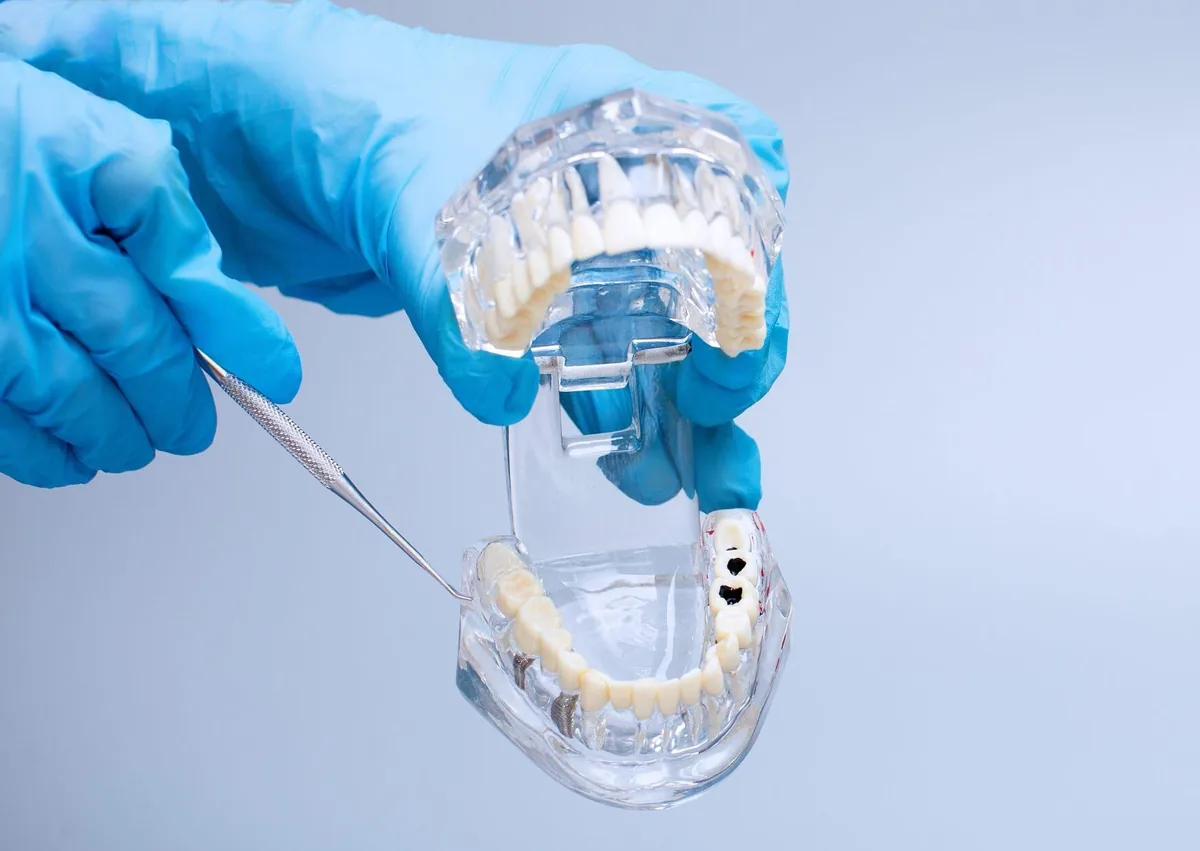
Cavities can look like chalky white spots, brown or black stains, small pits, or visible holes. But many cavities are not easy to see at home, so a new mark, sensitivity, pain, or a rough or broken area should be checked with a dental exam instead of judged by appearance alone.
If you've noticed a new dark spot, sensitivity, or a broken area, a dental exam can clarify whether the change is harmless or needs treatment. At Dental Care Center of Hollywood in Hollywood, FL, our exam visits combine evaluation and preventive care to guide the right next step for your teeth.
Early decay often starts as a dull, chalky white area where enamel has lost minerals. These spots commonly form near the gumline, between teeth, or around braces.
As decay gets worse, the area may turn light brown, dark brown, or black. The tooth may also develop a rough pit, a small hole, a chipped edge, or a place where food keeps getting stuck.
Color alone does not confirm a cavity. Stains, tartar, natural grooves, and older dental work can also look dark, while some cavities stay hidden until a dentist finds them on an exam or X-rays.
A cavity develops when bacteria in plaque use sugars and other fermentable carbohydrates to make acids. Repeated acid attacks pull minerals from enamel, and untreated decay can move into dentin and then toward the pulp, where the tooth’s nerves and blood vessels are located.
|
Stage |
Possible Appearance |
Possible Symptoms |
Common Approach |
|---|---|---|---|
|
Early mineral loss |
Chalky white or dull area |
Often none |
Fluoride and risk reduction may help stop or reverse damage before a hole forms |
|
Enamel cavity |
Brown spot, small pit, or no visible change |
None or mild sensitivity |
Often a small filling if the surface has broken down |
|
Dentin decay |
Darker area or visible hole |
Sensitivity to sweets, cold, or chewing |
Usually a filling; larger damage may need an inlay, onlay, or crown |
|
Decay near or into the pulp |
Deep hole, broken tooth, or sometimes little visible change |
Lingering pain, spontaneous toothache, or pain with biting |
Root canal treatment and restoration may be needed; some teeth require removal |
|
Infection or abscess |
Swelling, gum bump, drainage, or facial asymmetry |
Severe pain, bad taste, fever, or tenderness |
Prompt dental treatment to address the infection's source |
If a cavity progresses to infection or an abscess, readers concerned about advanced spread or complications can learn more about signs and management of an infected tooth.
Symptoms do not always match the size of the cavity. A deep cavity may cause little discomfort, while a small exposed area can feel very sensitive.
Cavities on chewing surfaces often begin in the narrow grooves of molars. They may look like dark dots or lines, but healthy grooves can also be stained.
Cavities between teeth usually cannot be seen in a mirror. Bitewing X-rays often reveal these areas before a visible hole forms.
Near the gumline, decay may look yellow, brown, or black. Root surfaces can decay faster than enamel because they do not have the same hard outer protection.
Around a filling or crown, a new shadow, rough edge, gap, or repeated food trap may point to decay, wear, or another problem. These changes should be evaluated rather than watched indefinitely.
A dentist looks at your symptoms, dental history, home-care habits, diet, dry mouth risk, and past cavity experience. The exam may include bright lighting, drying the tooth, checking the surface carefully, evaluating the gums, and taking digital X-rays when needed, consistent with guidance on dental radiographic examinations.
This helps separate true decay from staining, enamel defects, cracks, tartar, and discoloration around older restorations. It also helps determine whether the area can be monitored or should be treated now.
Do not scrape or pick at a suspicious spot. That will not confirm a cavity and may damage the tooth or irritate the gums.
Treatment depends on whether the tooth surface is still intact, how deep the decay goes, where the cavity is located, and how much healthy tooth remains. Dentists usually recommend the least invasive option that can reliably stop disease and restore function.
Some offices can complete certain crowns or restorations in one visit using digital technology. Same-day care is not right for every case, and infection, healing needs, lab work, or insurance requirements may make extra visits necessary.

A cavity visit usually starts with an exam and, when appropriate, X-rays. The dentist should explain what they found, how urgent it is, your treatment choices, expected longevity, cost considerations, and what could happen if treatment is delayed.
If you need a filling, local anesthetic is commonly used to numb the tooth. The dentist removes decay, places the restoration, and checks your bite before you leave.
Mild sensitivity to temperature or pressure can happen afterward. If symptoms persist, worsen, or feel severe, you should report them.
If you feel anxious about dental treatment, ask about comfort measures such as breaks, topical numbing gel, calm step-by-step communication, nitrous oxide, or oral or intravenous sedation when appropriate.
Sedation options vary by office and may require health screening, fasting instructions, and a responsible adult for transportation.
Treating a cavity should also address why it formed. Brushing twice a day with fluoride toothpaste, cleaning between teeth daily, and keeping regular recall visits can lower future risk.
Frequent snacking or sipping gives cavity-causing bacteria more chances to make acid. Water, more structured meal timing, and fewer sugary or acidic drinks can reduce those repeated attacks.
Dry mouth also raises cavity risk. A dentist can help identify the cause and recommend fluoride support, saliva-support measures, sealants, diet changes, or closer monitoring when needed.
Ask the dentist to show you where the decay is and explain whether the surface has formed a true hole. It is reasonable to ask whether monitoring is safe, how much healthy tooth remains, and which option preserves the most natural structure.
Cost and convenience matter, but delaying active decay can turn a small filling into a crown, root canal, or extraction. A second opinion may be helpful for an unclear diagnosis or a large treatment plan, unless swelling, severe pain, or infection makes prompt care more important.
Schedule a routine dental visit soon if you notice a new white, brown, or black spot, a pit, repeated food trapping, a chipped area, or sensitivity that does not go away. A toothache, pain when biting, a lost filling, or a broken tooth also deserves prompt evaluation.
Seek urgent dental care for facial or gum swelling, drainage, fever, severe or worsening pain, or trouble opening the mouth. Trouble breathing or swallowing, rapidly spreading swelling, swelling near the eye, or major facial or neck swelling requires emergency medical care.
Even without pain, a suspicious change is worth checking. Early treatment is often simpler and helps preserve more of your natural tooth.
For evaluation and prompt treatment of suspected cavities, a dental exam helps determine whether monitoring, fluoride, or a filling is best. Contact Dental Care Center of Hollywood for dental exams and cleanings in Hollywood, FL and nearby Hollywood Hills and Emerald Hills; call (954) 989-5500 to schedule.
Yes. A cavity can look black, brown, or gray, but color alone does not prove active decay. Stained grooves, tartar, and some older restorations can also look black, so a dentist needs to evaluate the tooth.
Yes. Early mineral loss can appear as an opaque or chalky white area, especially near the gumline or around orthodontic brackets. At that stage, treatment may be possible before a hole forms.
Yes. Cavities between teeth and under intact-looking enamel may cause no pain and may only be found during an exam or on dental X-rays.
Early mineral loss may sometimes be stopped or reversed with fluoride and changes that reduce acid exposure. Once the tooth surface has broken down into a hole, it generally cannot regrow and usually needs restorative treatment.
No. Cracks, gum disease, grinding, sinus pressure, exposed roots, and other conditions can cause similar symptoms. Persistent, severe, worsening, or unexplained pain should be evaluated.
| Monday | 8:30 AM – 5:30 PM |
| Tuesday | 8:30 AM – 5:30 PM |
| Wednesday | 8:30 AM – 5:30 PM |
| Thursday | 8:30 AM – 5:30 PM |
| Friday | 8:30 AM – 1:30 PM |
| Saturday | Closed |
| Sunday | Closed |