
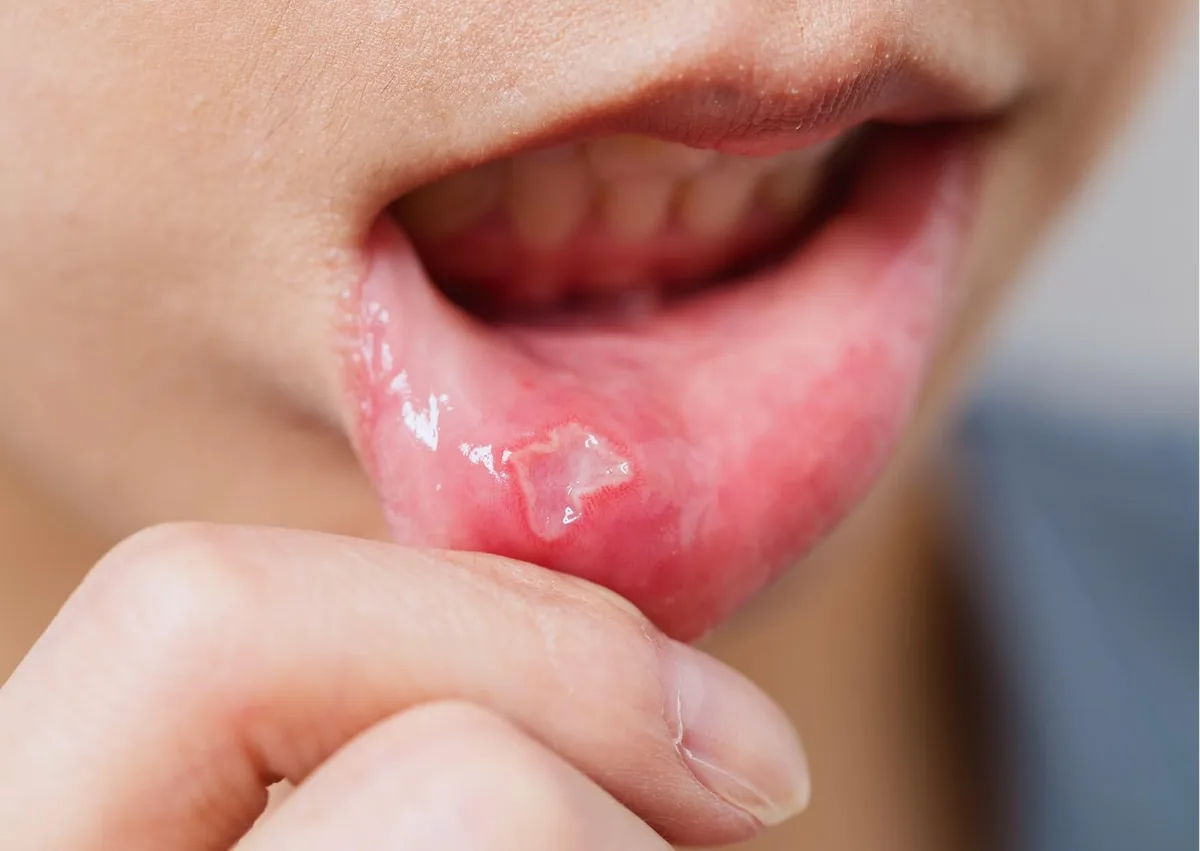
Most canker sores last 7 to 14 days and heal on their own without scarring. Larger or deeper sores can last several weeks, and any sore that lasts more than two weeks, keeps coming back, or becomes unusually painful should be checked by a dentist or medical professional.
If a painful or lingering mouth sore is making it hard to eat, talk, or brush, a dental exam can help identify whether irritation, injury, or another oral problem is involved. At Dental Care Center of Hollywood in Hollywood, FL, patients can get a focused evaluation, symptom relief guidance, and help deciding whether further testing is needed.
A canker sore, also called an aphthous ulcer, is a small, shallow sore that forms inside the mouth. It often looks round or oval with a white, yellow, or gray center and a red border.
These sores commonly appear on the inside of the lips or cheeks, under or on the tongue, on the soft palate, or along the gums. Even a small sore can hurt quite a bit, especially when eating, drinking, brushing, or speaking.
Canker sores are not contagious. They are different from cold sores, which are caused by the herpes simplex virus and usually form blisters on or around the lips.
Minor canker sores are the most common type and usually heal within two weeks. Major canker sores are larger and deeper, may be more painful, and can take up to six weeks or longer to heal.
The exact cause is not always clear, but many canker sores start after irritation or minor trauma. Common triggers include biting the cheek, brushing too hard, eating sharp foods, recent dental work, or friction from a rough tooth, filling, or appliance.
Other triggers may include stress, hormonal changes, and food sensitivities. Some people also develop sores related to nutritional deficiencies such as low iron, folate, zinc, or vitamin B12.
When sores are frequent, severe, or slow to heal, an underlying immune, inflammatory, or gastrointestinal condition may be contributing. That is one reason a persistent pattern deserves professional attention.
Most minor canker sores improve with time and supportive care. The goal is to reduce irritation while the tissue heals.
Helpful steps include:
Do not put aspirin directly on the sore, because it can damage the tissue. Avoid picking at the area or trying to cut, drain, or burn it at home.
A dentist can tell whether the sore looks like a typical canker sore or something else, such as a traumatic ulcer, cold sore, oral infection, medication reaction, or another tissue change. That matters when a sore is lasting longer than expected or does not look typical.
The exam may also show a local cause that keeps the area irritated. A sharp tooth edge, broken filling, orthodontic wire, or poorly fitting appliance can delay healing until it is corrected.
Treatment depends on the cause and severity. A dentist may smooth a rough area, adjust an appliance, recommend a protective product, or prescribe a topical medication to reduce inflammation and improve comfort.
If sores are severe, frequent, or slow to heal, the dentist may recommend testing or referral to look for nutritional or medical causes. In some cases, oral pathology evaluation is needed to identify abnormal tissue and guide treatment.
The visit usually starts with a few simple questions. The dentist may ask when the sore started, whether it has changed, how often sores happen, and whether you have other symptoms.
The exam is usually quick and focused. It may include the sore itself, nearby teeth and restorations, appliances, the rest of the mouth, and sometimes the lymph nodes.
Most sore evaluations do not require sedation. If a painful area needs treatment or tissue sampling, local anesthetic can numb the site, and patients with dental anxiety can ask whether additional comfort or sedation options are available.
Some causes can be addressed the same day. For example, a dentist may smooth a sharp tooth or adjust an appliance that is rubbing the tissue.
Prevention starts with looking for patterns. It can help to note when sores appear, what foods you ate, whether you were stressed or sick, and whether there was any mouth injury or product change.
Regular dental care can also help prevent repeat irritation. Exams can catch rough restorations, broken teeth, bite-related trauma, and poorly fitting appliances before they keep injuring the same area.
Gentle brushing, good hydration, a balanced diet, and properly fitted mouthguards or orthodontic appliances may also lower the risk. When sores keep returning, prevention often depends on finding and addressing the trigger.
The right approach depends on the sore's size, how long it has been there, how often it returns, and whether there is an obvious cause. A small sore that is already improving may only need home care and monitoring.
A sore that is large, very painful, repeatedly triggered by irritation, or not healing normally may need targeted dental treatment. If the pattern suggests a broader health issue, further medical evaluation may also be appropriate.

Schedule a dental exam or medical evaluation if a mouth sore lasts longer than two weeks, keeps returning, grows, becomes more painful, or does not steadily improve. Prompt care is also a good idea if you have multiple sores or trouble eating and drinking.
Sores that persist beyond two weeks or look unusual may need an oral cancer exam to rule out serious conditions. Additional warning signs include swollen lymph nodes, fever, rash, diarrhea, joint symptoms, unexplained weight loss, or a firm, red, white, bleeding, or ulcerated area.
Seek urgent medical care for trouble breathing or swallowing, rapidly increasing swelling, severe dehydration, or swelling involving the face or neck. If the cause is unclear or the pain is interfering with daily life, an exam can help clarify what is going on and what to do next.
For persistent, large, or worsening mouth sores, the appropriate next step is a focused dental exam to assess the lesion, rule out serious causes, and plan treatment. Contact Dental Care Center of Hollywood for dental exams in Hollywood, FL and nearby Hallandale Beach or Dania Beach; call (954) 989-5500 to schedule or request an appointment.
A small sore may feel better within a few days, but full healing often takes 7 to 14 days. Pain usually improves before the tissue fully closes.
Healing may be delayed by repeated irritation, a larger ulcer, a nutritional deficiency, or an underlying health condition. It is also possible that the lesion is not a canker sore, which is why sores lasting more than two weeks should be evaluated.
No. Canker sores are not contagious and cannot be spread through kissing, sharing utensils, or other contact.
Yes, stress can be a trigger for some people. It is often one of several factors, along with irritation, food sensitivities, or nutritional issues.
A dentist is a good first choice for a painful or persistent mouth sore, especially when irritation from a tooth, filling, or appliance may be involved. A physician may also be appropriate if sores happen with fever, digestive symptoms, skin changes, or other signs of a broader medical condition.
| Monday | 8:30 AM – 5:30 PM |
| Tuesday | 8:30 AM – 5:30 PM |
| Wednesday | 8:30 AM – 5:30 PM |
| Thursday | 8:30 AM – 5:30 PM |
| Friday | 8:30 AM – 1:30 PM |
| Saturday | Closed |
| Sunday | Closed |