Affordable dental implants in Hollywood, FL, are possible for many patients, but the real cost depends on how many teeth are missing, the condition of the bone and gums, and what type of final restoration is needed.
The best way to compare options is with a complete implant evaluation and a written treatment estimate, not an advertised starting price alone. For a clear overview of advantages and drawbacks, see dental implants pros and cons.
If you are weighing tooth replacement options or concerned about bone loss, understanding whether dental implants are right for you clarifies long-term comfort and function. A focused implant evaluation at Dental Care Center of Hollywood in Hollywood, FL provides an itemized treatment plan and realistic timeline to guide your decision.
A missing tooth is not only a cosmetic issue. It can change how you chew, affect speech, let nearby teeth drift, and lead to gradual bone loss in the jaw.
Teeth may be lost because of decay, gum disease, injury, a failed root canal, or a fracture below the gumline. When the root is gone, the bone in that area no longer gets normal stimulation and may slowly shrink.
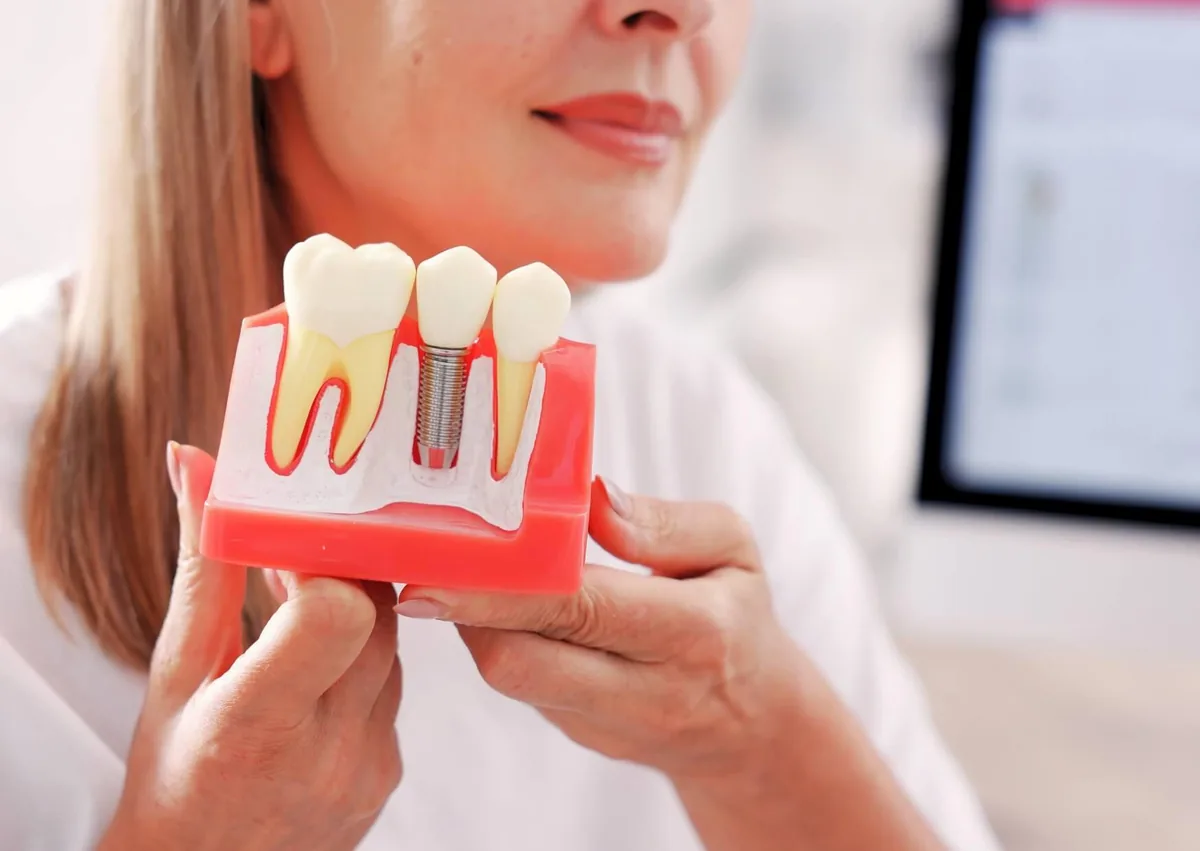
Dental implants replace missing tooth roots with small posts, usually made of titanium, that support crowns, bridges, or dentures. Through osseointegration, the jawbone bonds to the implant and creates a stable foundation.
Not every damaged tooth needs to be removed. Depending on the exam and X-rays, a dentist may still be able to save it with a filling, crown, root canal treatment, or periodontal care.
Implant treatment involves more than the implant post alone. Total cost may include imaging, tooth removal, bone grafting, the implant, an abutment, a temporary tooth, the final crown or bridge, and follow-up visits.
A low advertised fee may cover only one part of treatment. Ask for a written, itemized estimate that shows what is included, whether the restoration is temporary or final, and how treatment changes would affect the fee.
Common cost factors include:
Dental insurance may help with exams, extractions, grafting, or restorations even when implant coverage is limited. Flexible spending accounts, health savings accounts, payment plans, and third-party financing may also help, but it is important to review interest rates, fees, and repayment terms.
The lowest upfront cost is not always the best long-term value. Comfort, durability, maintenance, and the effect on nearby teeth all matter when comparing treatments.
|
Treatment |
Typical Use |
Main Considerations |
|---|---|---|
|
Single implant and crown |
One missing tooth |
Does not require reshaping adjacent teeth; needs adequate bone and healing time |
|
Implant-supported bridge |
Several nearby missing teeth |
May replace multiple teeth with fewer implants; design depends on bite and bone support |
|
Implant-retained denture |
Many or all teeth missing |
Can improve denture stability; remains removable in many designs |
|
Full-arch fixed implant teeth |
Most or all teeth in one arch |
Fixed restoration with more involved planning, surgery, maintenance, and cost |
|
Traditional bridge |
One or more missing teeth |
Usually faster, but neighboring teeth often must be reshaped |
|
Removable partial or complete denture |
Several or all teeth missing |
Lower initial cost in many cases; may move and does not replace tooth roots; see dentures & partials |
A personalized comparison should also cover expected lifespan and likely maintenance. Even when an implant remains healthy, the crown, connectors, or denture attachment may still wear down or need repair over time.
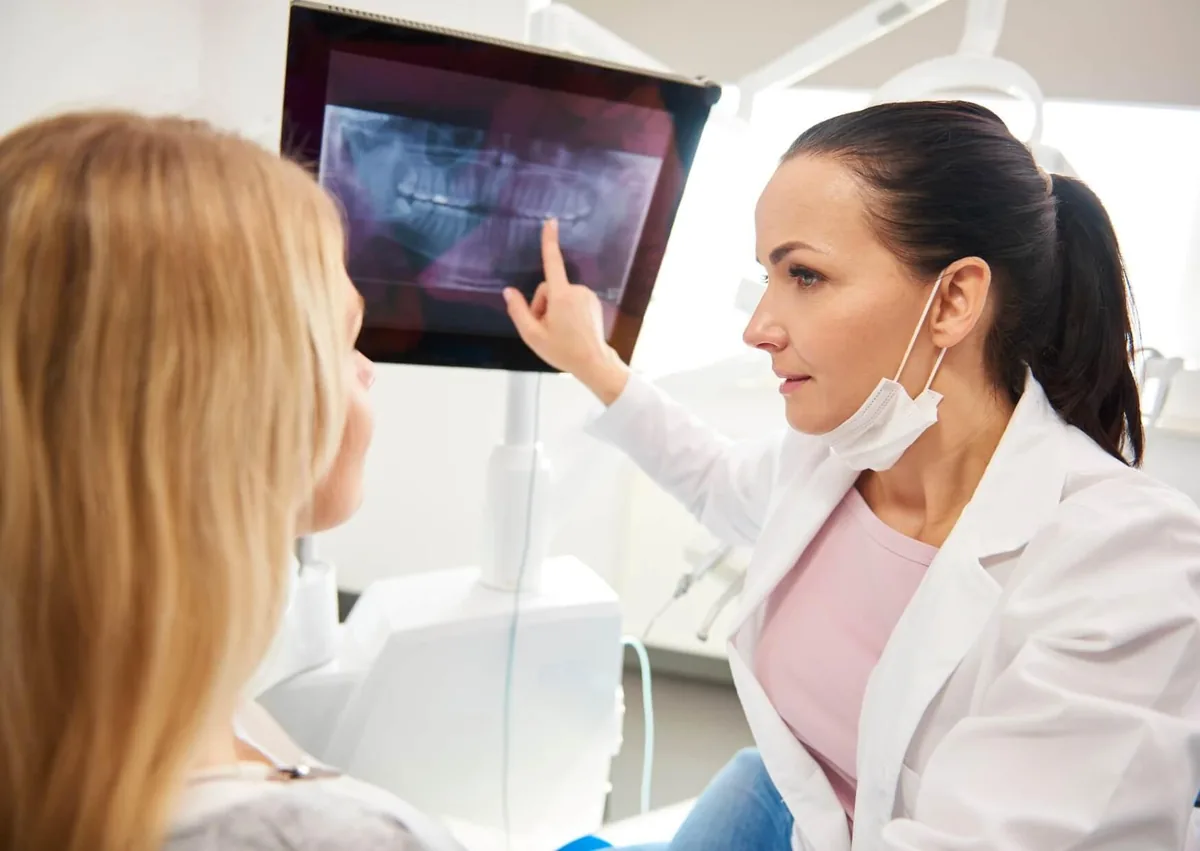
The first visit usually includes a medical and dental history, a gum exam, a bite check, and imaging. Three-dimensional cone-beam CT imaging may be recommended to measure bone and plan safe implant placement.
The dentist will also review factors that can affect healing, such as uncontrolled diabetes, active gum disease, nicotine use, immune disorders, and certain medications. Published risk factors for implant failure include smoking and diabetes, which is why medical history matters.
During implant placement, local anesthetic numbs the area. Comfort options may include nitrous oxide, oral sedation, or IV sedation when appropriate, with individualized screening and instructions from the treating office.
Some patients can receive an implant and a temporary tooth on the same day as an extraction. Same-day teeth do not always mean same-day final teeth, and the temporary restoration may need light chewing while the implant heals.
Before implant surgery, dentists usually treat active infection, uncontrolled gum disease, and major bite problems. If the jaw does not have enough width or height, bone grafting may be recommended to create better support.
In the upper jaw, sinus augmentation may be needed to add bone beneath the sinus when natural bone is limited. Because implant placement is a form of oral surgery, some patients also want to understand when they may need oral surgery.
Accurate placement matters because the implant must support a natural-looking tooth while avoiding nearby roots, nerves, and sinus spaces. Digital planning and surgical guides can help in some cases, but they do not replace clinical judgment or follow-up care.
Some practices also use advanced healing methods such as L-PRF in implant healing after grafting or surgery. These techniques may support soft-tissue and bone healing in selected cases.
After treatment, daily brushing, cleaning around the restoration, and regular professional care are still essential. Implants do not get cavities, but the surrounding tissues can develop peri-implant disease, which may lead to bleeding, bone loss, and implant failure.
Nighttime clenching, smoking, and inconsistent maintenance can raise the risk of complications. A nightguard, nicotine cessation support, or more frequent cleanings may be recommended based on your risk factors.
Look for a dentist who evaluates the whole mouth, explains alternatives, and gives realistic guidance about benefits, limits, and timing. Cost matters, but so do training, materials, who performs each stage, and the plan for long-term maintenance.
Useful consultation questions include:
Be cautious with guarantees, pressure to commit immediately, or pricing that cannot be explained clearly in writing. A second opinion can be worthwhile for full-arch treatment, extensive grafting, or a recommendation to remove several teeth.
Schedule an evaluation when a tooth is missing, loose, repeatedly infected, or too painful to chew on, even if symptoms come and go. Early care may preserve more bone and may show whether the tooth can still be saved.
Seek urgent dental care for worsening swelling, pus, fever, severe persistent pain, uncontrolled bleeding, or trauma that loosens or knocks out a tooth. Facial swelling that affects breathing or swallowing, swelling near the eye, or signs of a rapidly spreading infection require emergency medical attention.
A thorough consultation can clarify candidacy, treatment stages, total expected fees, and alternatives that fit both health needs and budget. Bringing insurance information, a medication list, and financing questions can make that discussion more productive.
A comprehensive implant consultation confirms candidacy, outlines necessary procedures such as bone grafting or sinus augmentation, and provides a detailed, written estimate. Call Dental Care Center of Hollywood for dental implants in Hollywood, FL and nearby Hollywood Hills or Emerald Hills at (954) 989-5500 to schedule your visit.
There is no single reliable fee because treatment may include imaging, extraction, grafting, the implant post, an abutment, and a crown. An in-person exam is needed for an accurate itemized estimate, and advertised prices should always be checked for exclusions.
Not necessarily. Affordability may come from financing, insurance contributions, phased care, or a simpler restoration, but unusually low prices should prompt questions about materials, included services, clinician qualifications, and follow-up care.
Local anesthetic usually prevents sharp pain during surgery, although you may still feel pressure or vibration. Temporary soreness, swelling, or bruising can happen afterward, and the treating dentist should provide personalized recovery instructions.
Some patients can receive implants and temporary teeth in one appointment, especially when bone stability is favorable. Final restorations are often placed after healing, and immediate treatment is not right for every case.
People with active gum disease, inadequate bone, uncontrolled medical conditions, heavy nicotine use, or certain medication-related risks may need additional treatment or evaluation first. Candidacy should be determined through an exam, medical review, and appropriate imaging.
| Monday | 8:30 AM – 5:30 PM |
| Tuesday | 8:30 AM – 5:30 PM |
| Wednesday | 8:30 AM – 5:30 PM |
| Thursday | 8:30 AM – 5:30 PM |
| Friday | 8:30 AM – 1:30 PM |
| Saturday | Closed |
| Sunday | Closed |